




Introduction
Businesses today create and manage more digital information than ever before. Every company, whether it is a startup, a small business, or a large international organization, stores important documents online. These documents may include financial reports, legal contracts, employee records, customer information, business plans, intellectual property, and confidential project files. Choosing the right place to store this information is one of the most important decisions a business can make.
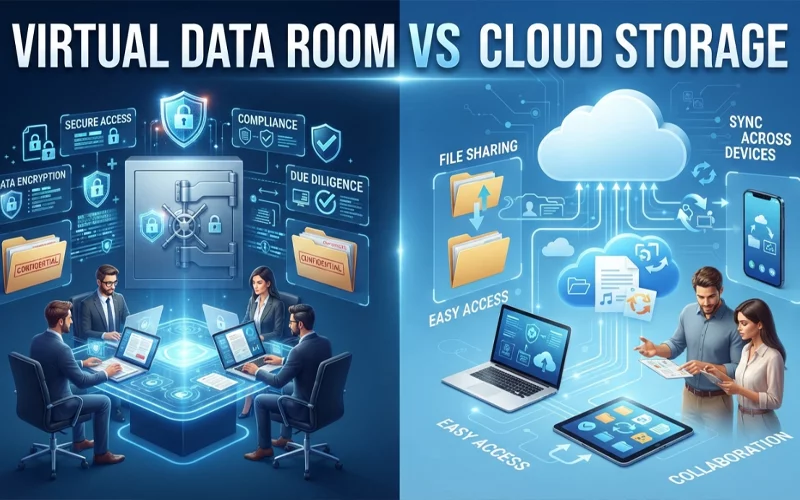
Many people compare Virtual Data Room vs Cloud Storage because both solutions allow users to save, organize, and share digital files. At first glance, they may look similar since both work online and allow remote access. However, they are designed for completely different purposes. Cloud storage focuses on convenience, file synchronization, and everyday collaboration, while a virtual data room is built with advanced security, strict access control, detailed activity tracking, and secure document sharing in mind.
As businesses continue to face increasing cybersecurity risks and stricter privacy regulations, understanding the difference between these two solutions has become more important than ever. Companies that deal with mergers and acquisitions, fundraising, legal cases, audits, or confidential business negotiations often require a much higher level of protection than ordinary cloud storage can provide.
In this detailed guide, we will compare Virtual Data Room vs Cloud Storage from every important angle. You will learn how both systems work, where they are used, their strengths, their limitations, and why many organizations choose virtual data rooms when handling highly sensitive business information.
Virtual Data Room vs Cloud Storage at a Glance
| Feature | Virtual Data Room | Cloud Storage |
| Primary Purpose | Secure sharing of confidential business documents | General file storage and sharing |
| Security Level | Very High | Moderate to High |
| User Permissions | Advanced and customizable | Basic to moderate |
| Activity Tracking | Detailed audit logs | Limited |
| File Protection | Watermarks, download restrictions, document expiration | Basic sharing controls |
| Best For | Mergers, acquisitions, legal work, fundraising, due diligence | Personal files, team collaboration, backups |
| Compliance | Supports many business compliance standards | Depends on provider and plan |
| Cost | Usually higher | Generally affordable |
What Is a Virtual Data Room?
A Virtual Data Room, often called a VDR, is a highly secure online platform designed for storing, managing, and sharing confidential business documents. Unlike regular online storage services, a virtual data room is built specifically for situations where sensitive information must be protected from unauthorized access while still allowing selected people to review important documents safely.
Businesses use virtual data rooms during events that require complete confidentiality. For example, when one company wants to buy another company, thousands of financial records, legal agreements, tax documents, employee information, and intellectual property files need to be shared with investors, lawyers, accountants, and business advisors. Instead of sending these files through email or basic cloud storage, companies upload them to a virtual data room where every action is monitored and controlled.
One of the biggest advantages of a virtual data room is its advanced permission system. Administrators can decide exactly who can open a document, print it, download it, edit it, or simply view it. Access can even expire automatically after a specific date or after a certain number of views. These controls reduce the risk of confidential information being copied or leaked.
Another important feature is document tracking. Every action inside the virtual data room is recorded. Administrators can see who viewed a document, how much time they spent reading it, which pages they opened, and when they accessed the files. This detailed activity history creates transparency and improves accountability throughout the document-sharing process.
Virtual data rooms also include security features that are rarely available in standard cloud storage platforms. Dynamic watermarks, encrypted file transfers, secure authentication methods, document expiration, remote access removal, and detailed reporting all work together to protect highly valuable business information.
Because of these capabilities, virtual data rooms have become essential tools for investment banks, law firms, healthcare organizations, financial institutions, private equity firms, venture capital companies, and many other businesses that regularly handle confidential documents.
What Is Cloud Storage?
Cloud storage is an online service that allows users to save files on remote servers instead of storing them only on their personal computers or office devices. Users can upload documents, photos, videos, spreadsheets, presentations, and many other types of files, then access them from almost any device connected to the internet.
One of the main reasons businesses choose cloud storage is because it makes storing, accessing, and sharing files quick and simple. Employees working from different cities or even different countries can easily access the same files, collaborate on projects, and keep documents synchronized across multiple devices. Instead of carrying USB drives or external hard disks, users simply log into their cloud account and continue working wherever they are.
Most cloud storage services also provide automatic backups, helping users recover important files if their computer crashes or gets damaged. File synchronization allows changes made on one device to appear automatically on every connected device, making teamwork faster and more efficient.
Cloud storage platforms usually include simple sharing features. A user can create a link and send it to coworkers, clients, or friends. Permissions such as view-only or edit access are available, making collaboration straightforward for everyday work.
Although cloud storage providers invest heavily in security, their primary goal is convenience rather than handling highly confidential business transactions. While encryption, password protection, and two-factor authentication help improve safety, cloud storage platforms generally lack many specialized features required during due diligence, mergers, acquisitions, legal investigations, and corporate audits.
For normal business operations such as sharing presentations, project documents, marketing materials, training files, or internal reports, cloud storage works extremely well. However, organizations dealing with highly sensitive financial records or confidential legal documents often require stronger controls than traditional cloud storage can provide.
Understanding the Main Difference Between Virtual Data Room and Cloud Storage
When comparing Virtual Data Room vs Cloud Storage, the biggest difference is not simply where files are stored. Both solutions keep documents online, but they serve very different business purposes.
Cloud storage is designed to make file storage simple, accessible, and collaborative. Its main objective is helping individuals and teams work together efficiently by allowing quick file uploads, downloads, synchronization, and sharing. Security exists, but it supports convenience rather than strict confidentiality.
A virtual data room, on the other hand, treats every document as highly valuable business information. Every file is protected using multiple security layers, every visitor is carefully authenticated, and every document interaction is recorded. Instead of simply storing files, a virtual data room creates a secure environment where businesses can confidently share confidential information without losing control over who sees it or how it is used.
Another significant difference is document governance. In cloud storage, once someone downloads a file, the organization may lose visibility over what happens next. In a virtual data room, administrators often have options to prevent downloads, disable printing, apply dynamic watermarks, or remove user access instantly. This level of control greatly reduces the chances of unauthorized distribution.
The difference also becomes clear during business transactions. Investors, lawyers, auditors, financial advisors, and executives often need access to hundreds or thousands of confidential documents within a short period. Virtual data rooms are specifically designed to organize these complex document collections while maintaining complete security and detailed reporting throughout the review process.
Security Comparison: Which Option Protects Sensitive Business Data Better?
Security is the most important factor when comparing Virtual Data Room vs Cloud Storage, especially for organizations that manage confidential business information.
Virtual data rooms are developed with security as the highest priority. Every document uploaded to the platform is protected through advanced encryption, secure authentication, detailed user permissions, and continuous monitoring. Administrators maintain complete control over every document throughout its lifecycle. They can instantly revoke access, restrict downloads, apply document expiration dates, enable dynamic watermarks, and monitor every action taken by each authorized user.
Another major advantage is the detailed audit trail. Every login, document view, download attempt, permission change, and user activity is automatically recorded. This information becomes extremely valuable during legal investigations, regulatory compliance reviews, financial audits, and corporate transactions where transparency is essential.
Cloud storage providers also use modern security technologies, including encrypted connections and secure servers. Many services support multi-factor authentication and offer basic permission controls for file sharing. These protections are sufficient for daily collaboration and ordinary business operations.
However, cloud storage generally provides broader access and simpler sharing because ease of use is its primary purpose. This makes it an excellent solution for teamwork but not always the safest choice for confidential negotiations, intellectual property, acquisition documents, or highly sensitive financial records where every document requires strict supervision and complete access control.
For businesses where privacy, compliance, and document confidentiality directly affect company value or legal responsibility, virtual data rooms provide a level of protection that goes far beyond what traditional cloud storage is designed to deliver.
Pricing Comparison: Which Solution Offers Better Value?
When discussing Virtual Data Room vs Cloud Storage, price is one of the first things businesses consider. At first glance, cloud storage appears to be the more affordable option. Most cloud storage providers offer free plans with limited storage, followed by monthly or yearly subscriptions that increase storage capacity and collaboration features. This pricing model works well for individuals, freelancers, small businesses, and teams that mainly need a place to store and share everyday files.
A virtual data room, however, is usually more expensive because it offers far more than simple online storage. The subscription cost includes advanced security technologies, detailed permission controls, audit trails, compliance support, document protection, professional customer service, and tools designed specifically for confidential business transactions. Businesses are not only paying for storage space but also for a secure environment that protects valuable company information.
Although the initial cost of a virtual data room may seem high, many organizations consider it a worthwhile investment. A single security breach, accidental data leak, or unauthorized document download can cause financial losses, legal problems, and damage to a company’s reputation. For businesses handling highly sensitive information, preventing these risks is often much more valuable than saving money on storage fees.
The right choice depends on the type of work a business performs. Companies that mainly collaborate on everyday documents may find cloud storage more than sufficient. Businesses involved in confidential financial transactions, legal matters, or investment deals usually receive greater long-term value from the additional protection offered by a virtual data room.
When Should Businesses Choose a Virtual Data Room?
There are many situations where a virtual data room becomes the better solution. During mergers and acquisitions, thousands of confidential documents must be reviewed by buyers, investors, lawyers, accountants, and executives. Every document contains valuable business information that cannot be exposed to unauthorized individuals. A virtual data room allows companies to control exactly who can access each file while maintaining a complete history of every action.
Fundraising is another common example. Startups seeking investment often share business plans, financial statements, market research, growth strategies, and intellectual property with potential investors. Instead of emailing confidential files, founders can organize everything inside a secure virtual data room where access is carefully monitored.
Law firms regularly handle sensitive legal documents that require strict confidentiality. Healthcare organizations manage patient information that must comply with privacy regulations. Financial institutions process confidential records that demand strong security controls. Government agencies, pharmaceutical companies, consulting firms, and private equity organizations also rely on virtual data rooms whenever document protection is critical.
In all of these situations, advanced security is far more important than simple file sharing, making virtual data rooms the preferred choice.
Advantages and Limitations of Both Solutions
Every technology has strengths and weaknesses, and understanding them helps businesses make better decisions.
Cloud storage stands out because it is affordable, simple to use, widely available, and excellent for collaboration. Employees can easily work together, synchronize files across multiple devices, and access documents from almost anywhere with an internet connection. It also provides automatic backups and reduces the need for physical storage devices.
However, cloud storage has limitations when dealing with highly confidential information. Permission controls are usually less detailed, document tracking is more limited, and businesses may have less control over how downloaded files are used outside the platform.
Virtual data rooms offer a much higher level of security, complete document monitoring, detailed access permissions, dynamic watermarking, document expiration, secure authentication, and compliance support. These features significantly reduce the risk of unauthorized access and improve accountability throughout sensitive business transactions.
The primary limitation is cost. Virtual data rooms require a larger financial investment and slightly more administrative setup than ordinary cloud storage. For businesses that only need simple file sharing, many of the advanced features may never be used. However, for organizations handling confidential information, these additional features often become essential rather than optional.
Virtual Data Room vs Cloud Storage: Which Is Better for Sensitive Business Data?
After comparing every important aspect of Virtual Data Room vs Cloud Storage, the answer becomes much clearer. Both solutions are valuable, but they are designed to solve different business problems.
If your company mainly stores everyday files, collaborates on projects, shares presentations, or backs up documents, cloud storage is usually the most practical solution. It is affordable, efficient, and easy for employees to use on a daily basis.
If your business handles confidential financial records, legal documents, mergers and acquisitions, investor information, intellectual property, or highly sensitive contracts, a virtual data room provides much stronger protection. Its advanced security controls, detailed audit logs, document tracking, and permission management create an environment specifically built for protecting valuable business information.
Many large organizations actually use both systems together. Cloud storage supports daily collaboration, while the virtual data room is reserved for confidential projects where security is the highest priority. This combination allows businesses to enjoy both convenience and maximum protection without compromising either objective.
Frequently Asked Questions
What is the main difference between Virtual Data Room vs Cloud Storage?
The main difference is their purpose. Cloud storage is designed for everyday file storage and collaboration, while a virtual data room is built to securely manage confidential business documents with advanced security and access controls.
Is a virtual data room more secure than cloud storage?
Yes. A virtual data room usually offers stronger security features such as detailed user permissions, audit trails, document watermarking, download restrictions, and activity tracking, making it better for sensitive business information.
Can small businesses use a virtual data room?
Yes. Small businesses can benefit from a virtual data room when raising investment, sharing legal documents, selling the company, or protecting confidential information during important business transactions.
Is cloud storage enough for normal business work?
For most daily business tasks, cloud storage is more than enough. It provides convenient file sharing, backups, and collaboration for employees working in different locations.
Which option is better for mergers and acquisitions?
A virtual data room is the preferred choice for mergers and acquisitions because it provides advanced security, controlled document access, and complete tracking of user activity throughout the due diligence process.
Final Verdict
Choosing between Virtual Data Room vs Cloud Storage is not simply about selecting the newest technology or the most affordable option. The right decision depends on the value and sensitivity of the information your business manages.
Cloud storage remains one of the best tools for everyday productivity. It simplifies teamwork, improves accessibility, and helps businesses organize their digital files efficiently. For routine operations, it continues to be an excellent choice.
A virtual data room, however, goes several steps further by creating a secure environment where confidential business information remains protected throughout every stage of a transaction. Features such as advanced permissions, encrypted document sharing, activity tracking, secure authentication, watermarking, and compliance support provide confidence that sensitive information stays under complete control.
Businesses that regularly deal with investors, legal professionals, auditors, financial institutions, government agencies, or corporate buyers should strongly consider investing in a virtual data room. While the upfront cost may be higher, the additional protection, transparency, and peace of mind often make it one of the smartest investments for safeguarding valuable business data.