




Heeled sandals bring together an open construction and the visual lift of a heel, making them one of the most adaptable footwear choices for warm-weather dressing. The right pair can suit work, events, or evening outfits comfortably. Understanding the different silhouettes also makes shopping easier because two pairs can have similar heel heights while offering very different support, coverage, and proportions.
The appeal of heeled sandals lies in their variety. Some designs use a broad base for steadier movement, while others use narrow heels or decorative straps for a refined profile. The front can alter the appearance of the foot as much as the heel changes the shoe’s overall line. Recognizing these details makes it easier to match a pair to the occasion. The same principles apply across different sandal heel styles, from casual wedges to formal narrow-heel designs.
Types of Sandals Heels at a Glance
| # | Style | Defining Feature | Best For |
| 1 | Block Heel Sandals | Broad, sturdy heel base | Work and longer wear |
| 2 | Stiletto Heel Sandals | Very slim, tall heel | Formal and evening outfits |
| 3 | Strappy Heel Sandals | Multiple straps across the foot | Parties and summer outfits |
| 4 | Kitten Heel Sandals | Short, slim heel | Daytime and smart-casual looks |
| 5 | Wedge Heel Sandals | Continuous sole from heel to front | Casual summer dressing |
| 6 | Platform Heels | Raised sole under the forefoot | Statement and party outfits |
| 7 | Flared Heel Sandals | Heel widens toward the base | Contemporary styling |
| 8 | Cone Heel Sandals | Heel tapers toward the bottom | Polished daytime looks |
| 9 | Spool or Louis Heel Sandals | Narrow middle with wider ends | Vintage-inspired outfits |
| 10 | Cuban Heel Sandals | Short, solid, slightly sloped heel | Structured outfits |
| 11 | Ankle Strap Heel Sandals | Strap wraps around the ankle | Dresses and occasion wear |
| 12 | T-Strap Heel Sandals | Central strap creates a T shape | Dresses and skirts |
| 13 | Slingback Heel Sandals | Strap passes around the back of the heel | Office and polished looks |
| 14 | Mule Heel Sandals | Open back with no rear strap | Casual and contemporary outfits |
| 15 | Espadrille Heel Sandals | Rope or jute-style sole | Warm-weather dressing |
| 16 | Fisherman Heel Sandals | Multiple interwoven straps | Casual summer outfits |
| 17 | Pointed Toe | Narrow, pointed front | Formal and refined looks |
| 18 | Square Toe | Straight, squared front edge | Modern everyday styling |
| 19 | Round Toe | Soft, rounded front shape | Casual and classic outfits |
| 20 | Almond Toe | Slightly tapered, rounded front | Polished outfits |
| 21 | Open Toe | Toes remain exposed at the front | Summer and occasion wear |
| 22 | Peep Toe | Small opening reveals the toes | Dressy and feminine looks |
| 23 | Low-Cut Vamp | Lower front coverage across the foot | Elegant, elongated appearance |
| 24 | V-Neck Vamp | V-shaped opening at the front | Sleek and elongated styling |
| 25 | High-Gloss Platform Front | Shiny elevated front section | Bold statement outfits |
Understanding Sandal Heels
A heeled sandal leaves part of the foot exposed while using a raised heel to add height. Unlike a closed pump, it may use straps, bands, or a partially open upper to hold the foot in place. That construction affects security, visible coverage, and how the sandal works with different outfits. The terminology becomes clearer when the heel and upper are considered separately.
The heel can be low, medium, or high, but height alone does not determine stability. A wide heel feels different from a narrow one, while an ankle strap can add security. The sole matters too: a platform changes the pitch, whereas a wedge creates continuous support. These differences are useful when comparing sandals for comfort, structure, and occasion.
When comparing different styles, look at three parts separately: the heel, the front, and the upper. This simple approach prevents common shopping confusion because a block heel describes the heel structure, while a strappy design describes the upper. One sandal can contain more than one of these characteristics at the same time.
Popular Types of Sandals Heels
1. Block Heel Sandals
Block heels use a broad, sturdy base rather than a slim heel post. The larger surface helps distribute body weight and gives the foot a more planted feel. That makes this design useful for workdays, outdoor weddings, dinners, and occasions where you may remain on your feet for several hours. The broad base gives this style a grounded feel and makes it practical when stability matters.
2. Stiletto Heel Sandals
Stilettos are defined by a long, narrow heel that creates a dramatic rise. Their slim profile works especially well with evening dresses, tailored outfits, parties, and formal occasions where the footwear is intended to look elegant and elongated. The heel shape, rather than the number of straps, is what gives this sandal its stiletto classification.
Their slim profile works especially well with evening dresses, tailored outfits, parties, and formal occasions where the footwear is intended to look elegant and elongated. The heel shape, rather than the number of straps, is what gives this sandal its stiletto classification.
3. Strappy Heel Sandals
Strappy sandals use several narrow bands, cords, ties, or leather elements to frame the foot. The straps may cross over the toes, travel diagonally across the upper, or wrap around the ankle. This creates visual detail without requiring a heavy-looking sole. The result can look delicate and detailed without adding much visual weight to the shoe.
The arrangement can be delicate or more substantial depending on the width and number of straps. A simple outfit can benefit from this added detail, especially when the sandal is meant to become part of the overall styling rather than remain understated.
4. Kitten Heel Sandals
Kitten heels provide only a small amount of lift, usually around one to two inches, with a slim profile that feels noticeably lighter than a high heel. Their understated shape has a vintage influence and suits daytime events, smart-casual dressing, and occasions where a refined finish is wanted without dramatic elevation.
The shorter heel can also make this style easier to incorporate into everyday wardrobes. It works naturally with trousers, midi skirts, dresses, and polished casual outfits where subtle height is enough.
5. Wedge Heel Sandals
Wedge sandals use one solid section of material to support the heel and extend forward beneath the foot. Instead of balancing on a separate heel post, the wearer stands on a continuous structure that can feel more stable across the sole. The continuous sole gives the style a different feel from sandals built around a separate heel.
Wedges have a naturally relaxed character and are widely associated with warm-weather clothing. Their shape can add height while keeping more material under the foot than a traditional narrow heel.
6. Platform Heels
A platform adds a thick layer under the front of the foot. It is often paired with a high heel, allowing the heel itself to remain elevated while the difference between the front and back becomes less steep than it would be on the same heel without a platform. This is a useful choice within types of sandals heels when the sole becomes an important part of the outfit.
Platforms can produce a bold, fashion-forward appearance. Because the raised section sits beneath the forefoot, platform sandals should be considered separately from the actual heel shape.
7. Flared Heel Sandals
A flared heel begins relatively narrow beneath the shoe and expands toward a broader base. The result sits visually between a very slim heel and a conventional block heel. It provides a sculpted outline while retaining more width at the bottom. Within types of sandals heels, the shape combines a narrow upper line with a broader base.
This profile can make the heel itself a noticeable design feature. It is particularly suitable for contemporary outfits where footwear is meant to add structure without looking overly heavy.
8. Cone Heel Sandals
Cone heels have a broad upper portion that tapers downward toward a narrower point, creating a shape similar to an inverted cone. They offer a distinctive alternative to straight block heels and traditional stilettos. This place in types of sandals heels makes the style useful for polished daytime dressing.
The gradual change in width gives cone heels a recognizable side profile. They can add character to a simple sandal while keeping the rest of the design relatively clean.
9. Spool or Louis Heel Sandals
A spool or Louis heel is wider near the shoe, narrows through the middle, and widens again at the base. Its shape is associated with historical footwear and has a recognizable curved profile. Among types of sandals heels, it is one of the most distinctive heritage-inspired shapes.
The changing width gives this heel a decorative quality even when the rest of the sandal is understated. It can work with vintage-influenced wardrobes as well as modern styling that incorporates traditional details.
10. Cuban Heel Sandals
Cuban heels are short, solid, and slightly sloped rather than completely vertical. They are more frequently associated with boots, loafers, and other structured footwear, but the shape can also appear in open footwear. Within types of sandals heels, the compact heel gives the shoe a grounded appearance.
Its sturdy profile creates a more structured effect than a delicate heel. This makes the Cuban shape easy to recognize when browsing footwear that uses traditional tailoring-inspired details.
11. Ankle Strap Heel Sandals
Ankle strap sandals feature a fastening band that wraps around the ankle and secures the foot from above the heel. The strap can be thin and delicate or wider and more structured, depending on the design. This detail adds definition around the ankle while working with different heel shapes.
Ankle straps are especially useful when a sandal needs a more secure feel than a simple slip-on design. They can be paired with dresses, skirts, tailored trousers, and occasion outfits without changing the underlying heel shape.
12. T-Strap Heel Sandals
T-strap sandals have a vertical strip running from the toe area toward the ankle, where it connects with a horizontal strap. The resulting shape creates a clear T-like outline across the foot. This construction adds structure while leaving much of the foot visible.
The design can look particularly polished with dresses and skirts because the central strap creates a defined vertical line. It can also appear with different heel shapes, making the T-strap a construction detail rather than a specific heel type.
13. Slingback Heel Sandals
Slingback sandals use a strap that passes around the back of the heel instead of fully enclosing the ankle. The open area around the rear of the foot gives the style a lighter appearance while the rear strap helps keep the sandal in place.
This construction works well for polished daytime outfits, office clothing, and dressier occasions. It can be combined with pointed, open, or other front shapes depending on the overall sandal design.
14. Mule Heel Sandals
Mule sandals have an open back with no rear strap, allowing the foot to slide into the shoe without a fastening around the heel. The front can be minimal or structured, while the heel may range from low to highly elevated.
Their open-back construction gives mules a relaxed, easy-to-wear character. They can work with casual trousers, dresses, skirts, and contemporary summer outfits, depending on the heel and upper design.
15. Espadrille Heel Sandals
Espadrille heel sandals are recognized by a sole traditionally wrapped or finished with braided jute or a similar rope-like material. The heel can be shaped as a wedge or platform, but the distinctive sole treatment is what gives the style its espadrille identity.
This construction is strongly associated with warm-weather dressing and works naturally with linen, cotton dresses, skirts, shorts, and relaxed trousers. Its textured sole can add a more casual character than a smooth formal heel.
16. Fisherman Heel Sandals
Fisherman sandals use multiple interwoven straps that provide more coverage across the foot than most open sandal designs. When paired with a raised heel, the familiar fisherman construction creates a more substantial silhouette while retaining an open-sided structure.
This style suits outfits that benefit from stronger footwear proportions, including casual dresses, wide-leg trousers, and contemporary summer looks. Its defining feature is the enclosed network of straps rather than the specific heel shape.
Different Types of Heels Names
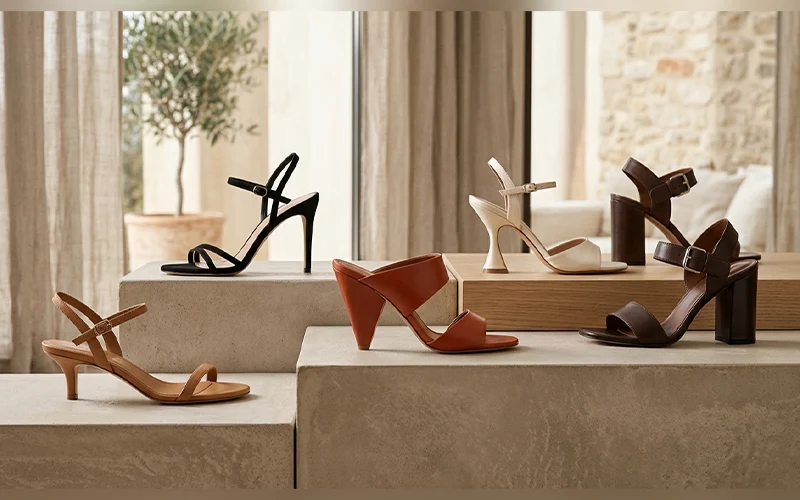
High heels are not defined only by how tall they are. Their names often come from the geometry of the heel itself, so learning the shape can make product descriptions much easier to understand. Within types of sandals heels, a platform is identified by the raised front rather than the rear heel alone. For summer wardrobes, these styles can be narrowed by the amount of coverage and the sole structure.
Classic and slim heel profiles include the stiletto, kitten, and cone. The stiletto is extremely narrow, the kitten remains low and delicate, and the cone gradually becomes narrower toward its base. These differences create noticeably different silhouettes even when the footwear shares a similar overall height.
Supportive shapes include block, wedge, and platform constructions. A block heel uses a broad base, a wedge continues beneath the foot as one solid piece, and a platform raises the front portion. These features can exist together. One sandal, for example, may have a block heel and a platform front.
Flared, spool, and other architectural profiles move away from simple straight columns. Their appeal often comes from the side view, where the heel widens, narrows, curves, or changes direction. Knowing these types of sandals heels terms also makes online product descriptions easier to interpret.
Sandal Front Styles You Should Know
The front of a heeled sandal controls much of its visible character. It also influences toe space, coverage, and the way the foot appears from the front. This is why understanding Types of heels front can be useful when comparing similar shoes. Many types of sandals heels combine a platform with another heel shape to change the proportions.
Closed-Toe Shapes
Pointed Toe
When shopping, comparing types of sandals heels by support first can make the final choice more practical.
A pointed toe narrows toward a distinct center point. The sharp shape creates a sleek line and is commonly associated with polished workwear, tailored clothing, and formal styling.
Square Toe
Different outfits call for different types of sandals heels, particularly when the hemline leaves the footwear exposed.
A square toe ends in a comparatively straight horizontal edge. The angular front has a structured appearance and can provide more room across the toe area than a strongly pointed construction.
Round Toe
The proportions of types of sandals heels can change how a simple outfit reads from a distance.
A round toe follows a softer curved outline that is closer to the natural front of the foot. It gives the shoe a traditional appearance and can suit casual or classic wardrobes.
Almond Toe
A useful way to compare types of sandals heels is to look at the side profile before focusing on color.
An almond toe sits between pointed and rounded designs. It narrows gradually but keeps a softer finish, creating a balanced shape for shoppers who want a refined front without an extremely sharp point.
Open and Cutout Fronts
Open Toe
An open-toe design leaves the front of the foot exposed. It is one of the most familiar constructions in warm-weather footwear and works naturally with lighter clothing and summer occasions.
Peep Toe
A peep toe uses a small opening at the front rather than exposing the entire toe area. Only the tips of the toes show, creating a controlled opening with a slightly retro feel.
Low-Cut Vamp
The vamp is the upper section that crosses the top-front area of the foot. A low-cut vamp sits lower and reveals more of the foot, which can create a longer visual line when viewed from the front. The appeal of types of sandals heels often comes from how several design details work together rather than from one feature.
V-Neck Vamp
A V-shaped opening directs the eye toward the ankle and creates a sharper geometric effect. It can change the proportions of the front without requiring a higher heel. For longer occasions, types of sandals heels should be considered alongside the surface and amount of walking involved.
High-Gloss Platform Front
A thick sole beneath the toe area can also transform the front of a high heel. Rather than serving as a heel on its own, it raises the forefoot and changes the relationship between front and back. This construction is noticeable on dramatic platform designs. These details are what make types of sandals heels a broad category rather than a single silhouette.
Types of Heels Sandals for Women
Choosing between types of heels sandals for women becomes easier when the purpose is defined before the style. An everyday pair may need moderate height and dependable support, while a formal evening sandal can prioritize a slimmer appearance. The fit matters because an attractive silhouette is not enough on its own.
For work, a moderate block heel or understated low heel often fits a polished wardrobe without making the footwear overly dominant. For weddings, a stable heel can be useful when walking across uneven surfaces, especially at outdoor venues. Different heel styles can work with the same outfit when the heel height and visual weight are balanced.
Party and evening outfits often use narrow heels, refined straps, metallic finishes, or dramatic platforms because these details become part of the overall look. Summer wardrobes can lean toward wedges, open fronts, natural textures, or lighter strap arrangements.
A useful approach is to decide the setting first and the silhouette second. This prevents choosing a shoe solely because it looks striking in a product image.
How to Choose the Right Heel Style
Start with the amount of time you expect to wear the sandal. Short events leave more room for highly elevated designs, while long periods of standing usually make broader support structures more practical.
Next, consider the surface. Smooth indoor floors provide a different challenge from grass, stone, or uneven outdoor paths. A wider base can offer greater control in situations where each step is less predictable.
The fit matters just as much as the heel. Straps should hold the foot securely without feeling restrictive, while the toe area should allow natural movement. The sandal should also bend and sit on the foot in a way that does not create unnecessary pressure.
Which Sandal Heel Works With Different Outfits?
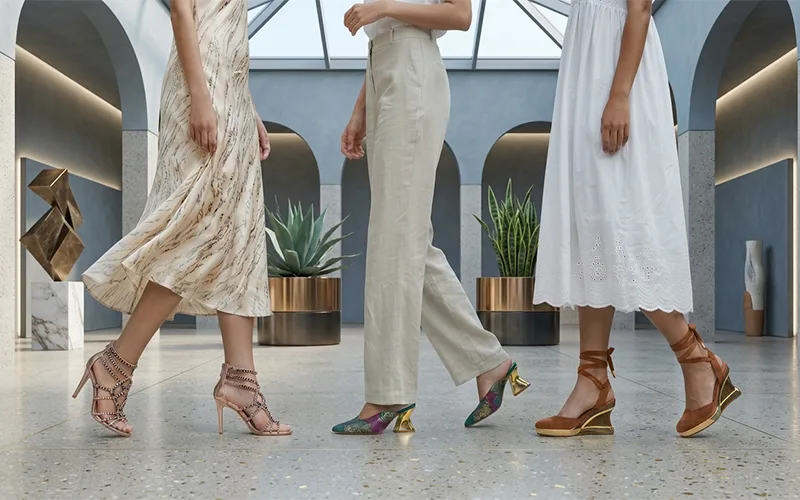
Dresses give you plenty of freedom because the footwear remains visible from the ankle down. Slim heels can reinforce an elegant evening look, while wedges or broader heels create a more relaxed finish. These types of sandals heels can shift the mood of the outfit.
With skirts, the relationship between hemline and shoe becomes particularly noticeable. A midi skirt can work with many heel heights, while a shorter hem can make the sandal itself a stronger part of the outfit.
Formal clothing usually benefits from clean lines. Simple straps, polished finishes, and controlled proportions can complement tailored outfits without competing with them.
How Heel Height Changes the Look
This section also clarifies types of sandals heels by height.
Low heels create a restrained change in height and are often easier to incorporate into everyday dressing. They keep attention closer to the outfit rather than making the footwear the dominant element.
Mid-height heels sit in a flexible middle ground. They provide visible elevation while remaining less dramatic than very tall silhouettes. This range can work across daytime functions, dinners, and semi-formal events.
High heels create the strongest vertical effect and can become a focal point of the outfit. Their visual impact is significant, but the right height should still reflect the wearer’s ability to move comfortably and confidently.
Tips for Wearing Heeled Sandals Comfortably
Comfort starts before the first step. Check that the heel sits securely under the shoe and that your foot is not sliding toward the front. Excess movement can make even a moderate heel feel unstable.
For a long occasion, test the pair indoors before committing to a full day. This reveals pressure points, rubbing areas, or fit issues that may not be obvious after a few minutes of wear.
Footwear should support the activity you actually plan to do. A pair chosen for dinner, for example, may have different practical requirements from one intended for several hours of standing or walking.
Conclusion
The best choice depends on what the sandal needs to do. A broad heel can suit long wear, a narrow heel can create a formal profile, a wedge can support relaxed summer dressing, and a low heel can keep the overall effect understated. Front shapes add another layer by changing toe coverage and visual proportions.
Once these differences are clear, footwear options become easier to navigate. Whether you are shopping for an everyday sandal, wedding pair, or statement evening style, knowing the terminology helps you compare designs precisely.
Frequently Asked Questions
What are the different types of heels sandals?
The main categories include block, stiletto, wedge, kitten, platform, flared, cone, spool, and Cuban heels, plus styles defined by their straps or upper construction.
What are the common heel names?
Common heel names include stiletto, kitten, cone, block, wedge, platform, flared, spool or Louis, and Cuban. These names usually describe the heel’s shape, structure, or position.
What are Ankle Strap heels?
Ankle Strap heels use a band around the ankle to secure the foot and add visual definition. The strap can appear on sandals with several different heel shapes.
Which heel type is easiest to walk in?
For types of sandals heels, broader bases remain a useful practical reference. Ease of walking depends on fit, experience, height, and surface, but broader bases generally provide more stability than very narrow heel posts.
What are the main front shapes?
Front designs include pointed, square, round, almond, open, peep-toe, low-cut vamp, and V-shaped vamp constructions. Each changes coverage and visual proportions.
Which sandal heels are suitable for everyday wear?
Moderate block heels, low heels, and some wedges are commonly suited to everyday use because they can offer a balance between height and support.
What type of heels look good with dresses?
The answer depends on the dress silhouette. Slim heels can suit formal evening dresses, while block heels and wedges can support more relaxed daytime styles.
How do I choose the right sandal heel height?
Consider wear time, walking surface, stability, and your comfort with the height. The tallest option is not always suitable.