


Think about a student in a small village. She watches a science lesson that was recorded in a big city. She asks a smart program a question and gets an answer in seconds. Then she takes a short quiz that marks itself. Not long ago, this was not possible. So, how does technology transform education? Simply put, it changes where we learn, how we learn, and what we need to learn. This guide explains the main changes step by step, in easy words. It also gives real examples, research numbers, and the problems that come with screens. At the end, you will find tips for writing an essay and answers to common questions.
Short Answer
Technology transforms education by changing where, how, and with whom students learn. It makes learning possible from any place, lets lessons fit each student, and helps teachers guide instead of only lecture. In simple words, learning moves out of one room and one timetable and becomes more open, more personal, and more active. The results depend on how well people use the tools, not on how many tools they have.
Learning From Anywhere
The first big change is access. Many people ask how technology has changed education positively, and this is often the best answer. In the past, a student needed to live near a good school, a large library, or a skilled teacher. Today, a student with an internet connection can join a class in another city, watch a live lesson at home, or catch up after being sick. Even when heavy rain or a long journey stops a student from reaching school, the lesson does not have to stop.
Time is also more flexible. Adults who work can study at night. Parents who left school years ago can return to learning. Students in faraway towns can study subjects that their local school does not offer. This also saves the cost and time of travel.
Many universities now put full courses online. A curious person can learn history, writing, or basic coding without moving to a new city.

Lessons That Fit Each Student
In a class of thirty, a teacher usually has to choose one speed. Some students get bored, and others get lost. Digital tools can help with this problem. Some programs check which answers a student gets right and then give easier or harder questions next.
A student who finds fractions hard can get extra hints and more practice. A fast learner can move on to harder tasks and never has to wait. Students can also pick the way they like to learn, such as reading, watching, listening, or trying a game.
There is also a quiet benefit. Many students feel shy about asking the same question three times in front of a class. A program never gets tired or annoyed, so students can try again until they understand. The result is a lesson built around the student, not around the “average” student.
Teachers Take a New Role
For hundreds of years, the teacher was the main source of knowledge. Now students can find facts in seconds, so the teacher’s job is changing. Teachers spend less time giving information and more time helping students understand it and use it. They act more like coaches.
Technology also takes simple jobs off the teacher’s desk. It can record attendance, mark short quizzes, share notes with parents, and store lesson plans. The time saved can be used for talking with students, giving extra help, and noticing who needs support.
Teachers grow too. They can take online courses, learn new methods, and share ideas with teachers in other schools. Good teachers now ask questions that a search cannot answer, such as “Why does this matter?” and “What would you do?” This kind of thinking is hard for a machine to copy, so it stays an important part of school.
Changes in the Classroom
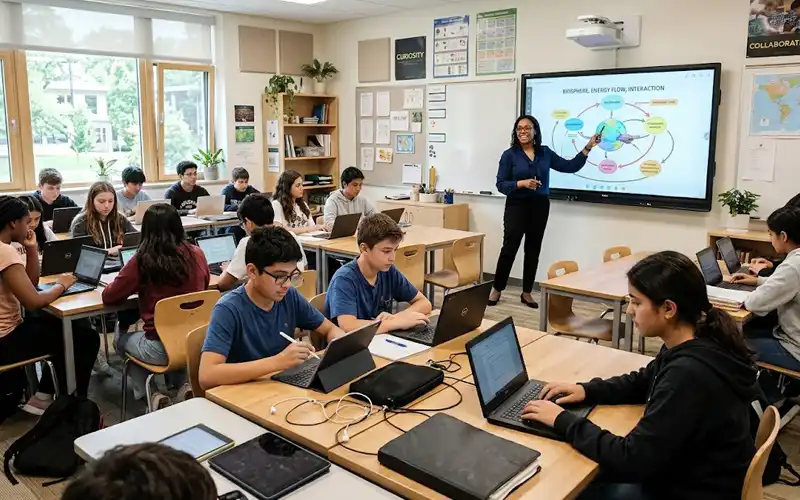
Walk into a modern room and you can see the change quickly. A smart board replaces the chalkboard. A projector shows maps, pictures, and short videos. Students may use tablets or laptops at their desks. These tools help students picture ideas that are hard to explain with words alone.
But how does technology transform education in the classroom beyond the tools? It changes the way lessons are planned. In a flipped lesson, students watch the explanation at home and use class time for practice and discussion. In a simulation, students can change one thing, such as the angle of a ramp, and see the result at once.
Projects look different too. Students can record a podcast, make a short film, or build a simple web page instead of only writing a report. They can also share their screen and show their work to the whole class. These tasks show understanding in a way that a normal test often cannot.
Fast Feedback and Better Tests
Waiting a week to get a test back slows learning. Online quizzes give a result in seconds, together with the right answer and a short explanation. The student can fix a mistake while the topic is still fresh. Small, regular quizzes also lower the stress of big exams, and trying to remember an answer often helps memory.
Teachers gain too. A simple report can show that most of the class missed the same question. That tells the teacher what to explain again tomorrow. Students can also see their own progress and find out which skills are strong.
Tests are changing as well. Some tests give harder questions when you answer well and easier ones when you struggle. Digital folders can also keep a student’s best work in one place over the whole year.
AI Helps Students Study
Artificial intelligence is the newest tool in education. A student who is stuck on a maths problem can ask for an explanation in simple words, ask for another example, or get extra practice questions at any hour. In the past, private tutoring was too costly for many families. AI can also explain a hard text in easier language, which helps students who are learning in a second language.
Teachers use AI too. It can suggest a lesson plan, write discussion questions, or change a reading text for different levels. This can save hours of preparation each week.
However, AI can make mistakes and can state wrong facts in a confident voice, so answers need checking. Students learn best when they try a problem first and then use AI to understand it, not to skip the thinking.

Working Together Online
Group work used to stop at the classroom door. Now a team can write one report in a shared document, even if each person is at home. A video call can bring a guest expert or a partner class from another country into the lesson. Two classes in different countries can, for example, measure the weather in their own towns and compare the results.
Online discussion boards also help quiet students. Some learners find it easier to type an idea than to say it out loud. Along the way, students practise polite online communication, which is useful in almost every job. These links also help students learn about other cultures and ways of thinking.
Skills for Future Jobs
Most jobs now use digital tools, so using them well is part of being ready for work. Students who practise with spreadsheets, research tools, and slides feel more comfortable when they start a job.
Deeper skills matter even more. These include checking if a source is reliable, solving problems step by step, and learning a new tool quickly. Some schools teach coding for this reason. They want students to learn logical thinking, not only to become programmers.
Study habits also grow. Online learning needs planning, because no one stands over the student all day. Students who learn to set goals and manage their own time build a skill that helps them for life.
Everyday Examples
Video Lessons
Many technology in education examples start with video. A good video can show a heart beating, a volcano erupting, or a country’s borders changing over time. A textbook can only describe these things. A teacher can also record one lesson and use it with many classes, which makes good teaching easier to share.
Science Labs on Screen
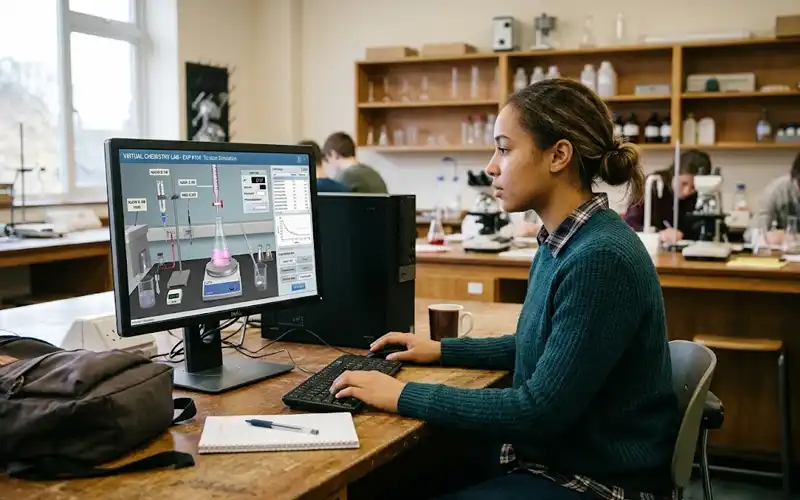
Virtual labs let students do experiments on a screen. They can mix chemicals, build a circuit, or test gravity with no costly equipment and no danger. They can also repeat an experiment ten times in ten minutes. This is a big help for schools that do not have a science lab.
Study Apps on Phones
Phones and tablets turn short breaks into study time. A student can practise a language, answer quiz questions, or use flashcards on a bus ride. Many apps give small rewards, such as points or daily streaks, to keep students motivated and to make practice feel like a game.
Online Libraries
An online library keeps books, articles, and old records in one place. A student can search for a topic, open a source in seconds, and save notes for later. Tools that read text aloud also help students who find reading hard, so more people can enjoy the same material.
What the Research Says
So how has technology improved education, according to real data? The answer is positive but careful. A large international study of about 700,000 fifteen-year-old students in 81 countries and economies found that students who used digital devices for school learning for up to one hour a day scored 14 points higher in maths than students who did not use them at all. A gap like this does not prove that devices alone caused the result, but it shows that light, focused use can go together with better scores.
The same study found that about three in four students felt confident using learning platforms and video calls. This shows that digital skills are spreading fast.
A 2023 global report that looked at more than 200 education systems adds a warning. It found that technology can improve some kinds of learning in some situations, but strong and fair evidence is still rare. Much of the information comes from the people who make the tools. In short, technology can help when it is chosen well, but nobody should assume that it always works.
Negative Effects of Technology
Losing Focus
Many people ask how technology has changed education negatively, and distraction is usually the first answer. In the large study above, 65% of students said that devices distracted them in at least some maths lessons. Students who were distracted by classmates’ devices scored 15 points lower in maths. Students who spent up to one hour a day on devices for fun scored 49 points higher than those who spent five to seven hours.
Cheating Made Easy
Digital tools make copying simple. A student can paste an answer from a website or ask an AI tool to write a whole essay. When this happens, the student skips the practice that builds real understanding, and teachers find it harder to grade fairly. Over time, the student may also lose trust in their own ability to do the work.
Privacy Worries
Learning tools often collect data about children, such as names, places, and study habits. A 2023 global review found that only 16% of countries clearly protect student data by law. Another analysis found that 89% of 163 learning products used during the pandemic could watch what children do. Parents and schools need to know where this data goes.
Not Everyone Has Access
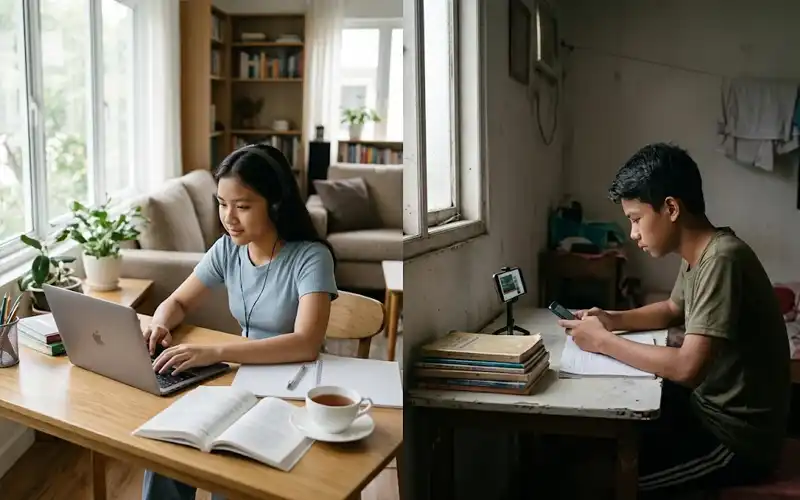
Some students cannot use these tools at all. During COVID-19 school closures, at least 463 million children, about one in three schoolchildren worldwide, could not take part in remote learning. About 72% of them lived in the poorest households, and three in four lived in rural areas. Technology can make the gap between rich and poor students wider if access is not shared fairly.
Smart Ways to Use Technology
The evidence points to one simple rule: start with the learning goal, then choose the tool. The global report mentioned earlier warns that many places invest in new technology without checking if it really helps students learn.
Some habits make a big difference. Use devices for clear tasks. Turn them off during discussions. Agree on screen limits at school and at home. Give teachers time to learn a tool before they use it with a class. It also helps to start small: try one tool, see how students respond, and then decide if it is worth using more.
Schools can also lend devices or give printed work to students who have no technology at home, so no one is left behind.
Writing an Essay on This Topic
If you need to write a how does technology transform education essay, start with a clear thesis. For example: “Technology transforms education by widening access, fitting lessons to each student, and changing the teacher’s role, but its benefits depend on fair access and careful use.” A good thesis takes a position and shows your main points.
A how technology is changing education essay works well in five parts: an introduction with a hook and a thesis, three body paragraphs, and a conclusion that answers the question again. Give each body paragraph one idea, one example, and one piece of evidence. One simple plan is benefits in the first paragraph, risks in the second, and smart use in the third. Linking words such as “for example,” “however,” and “as a result” help your ideas flow.
Do not just list tools. Explain what changed, why it matters, and who it affects. Finish with a clear opinion, so the reader knows what you think.
The Future of Learning
Virtual and augmented reality may soon let students walk through an old city or look inside the human body in 3D. As headsets become cheaper and easier to use, more schools may try them.
Learning is also becoming lifelong. Jobs change fast, so many people return to short courses again and again during their careers instead of stopping at age 22. Schools may spend less time on memorising facts and more time on questions, judgement, and creativity.
Whatever comes next, one idea should stay the same: technology should serve students and teachers, not the other way around.
Topics to Read Next
If you search for technology in education articles, you will see the same big themes again and again. Knowing them helps you read faster and judge what is useful.
Common themes include how to build digital skills in children, how schools can protect student data, how to reduce screen time without losing the benefits, and how teachers can use AI in a fair way. You will also see debates about phones in class, online exams, and homework in the age of AI.
When you read any article, ask three simple questions. Who wrote it? What evidence does it give? Does it show both the benefits and the problems? Good articles answer all three.
Frequently Asked Questions
Which subjects benefit most?
Subjects that use pictures and practice, such as science, maths, and languages, often gain a lot. Videos, simulations, and quick quizzes suit them well. Still, results depend on how the lesson is designed, and a poor lesson stays poor even with a good tool.
Is it good for young children?
It can be, in small and guided amounts. Young children learn best through play, talk, and hands-on activity. Screens should support these, not replace them. Short sessions with an adult nearby work better than long time alone.
Can students learn without internet?
Yes, to some extent. Many lessons, books, and videos can be saved on a device and used offline. Printed worksheets and lessons on radio or television can also reach students with no connection.
When did this change begin?
It began long before smartphones, with radio and television lessons and the first school computers. The internet then made information easy to reach, and mobile devices and AI have made the change faster in recent years.
Will technology replace teachers?
No. Technology can handle routine tasks, such as practice questions and quick marking. But it cannot give care, encouragement, or real understanding of a child. Students do best when good teachers and good tools work together.
How can parents help at home?
Parents can show interest. Ask your child to explain what they learned today, keep a regular study time, and praise effort, not only marks. You do not need to know the tool. Your attention and support matter most.
Final Thoughts
Technology transforms education by opening access, fitting lessons to each learner, and giving teachers more time to teach. It also brings distraction, privacy risks, and unequal access. So the results depend on the choices people make. Before using any tool, ask one simple question: will this help students learn something they could not learn as well without it?