

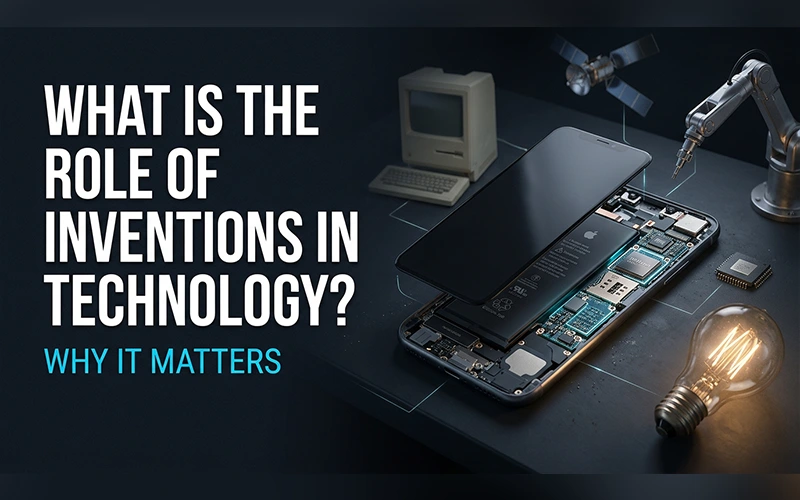


Take a moment to examine the smartphone in your hand. The touchscreen, the battery, the GPS receiver and the cellular radio inside it were developed by different people, in different decades, for different reasons. Yet together they fit in your pocket. So, what is the role of inventions in technology? Inventions are the starting points, and technology is what grows once those starting points are put to work. The importance of inventions in technology becomes obvious when you trace any modern tool back to its roots.
Where Technology Begins
Technology is the wider body of tools, methods and knowledge people use to get things done. An invention is a specific, new creation that pushes that body forward.
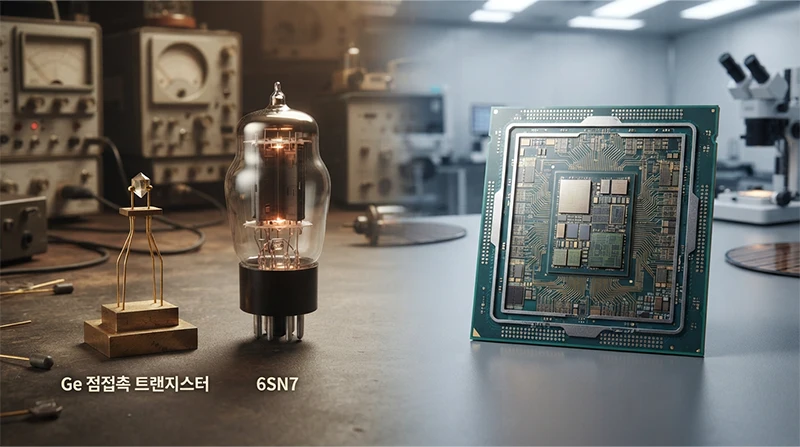
A single invention can also open a whole new territory. The transistor, built at Bell Labs in 1947, replaced bulky vacuum tubes. That one component made computers small enough for a desk and later a pocket, and it underpins the internet and nearly every digital device today.
How One Invention Reshapes Everything Around It
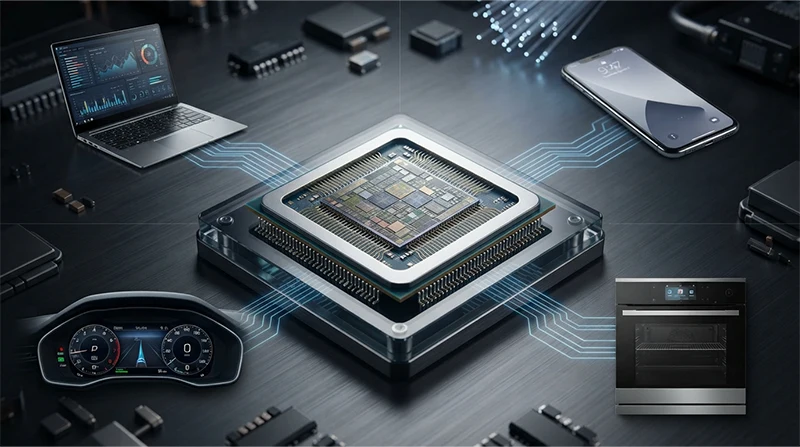
Some inventions become platforms for thousands of others. The microprocessor was first designed for calculators, yet it went on to dictate the design of personal computers, cars and kitchen appliances for decades. This is how inventions shape technology: they set the direction that later tools have to follow.
Infrastructure bends to fit them too. The automobile pushed societies to build paved highways, traffic signals and fuel networks. Invisible rules matter just as much. TCP/IP, the communication protocol of the internet, still decides how every website, app and smart device sends data.
Research money follows proven ideas. After CRISPR showed that DNA could be edited precisely, biotechnology moved from simply reading genes to rewriting them. Older branches get pruned along the way, as digital cameras and USB flash drives pushed chemical film and floppy disks out of the mainstream.
Inventors also shape how people operate machines. Punch cards gave way to keyboards, then mice, then touchscreens, and now voice and AI assistants. Each step made designers rethink their software and hardware.
Why Technology Cannot Move Without Inventions
Ordinary engineering improves what already exists, such as a faster processor or a lighter frame. Inventions add capabilities that did not exist at all. Microbiology and modern diagnostics, for instance, began with the microscope.
Inventions also help societies do more with less. Synthetic fertilizers and drought-resistant crops have helped feed billions of people on limited farmland. New industries appear as well. The internet created e-commerce, cloud computing and software development as career paths that had no equivalent a generation earlier.
Productivity changes in the same way. Spreadsheets, automated machinery and AI tools finish in seconds what once took weeks of manual effort.
How Science and Technology Work Together
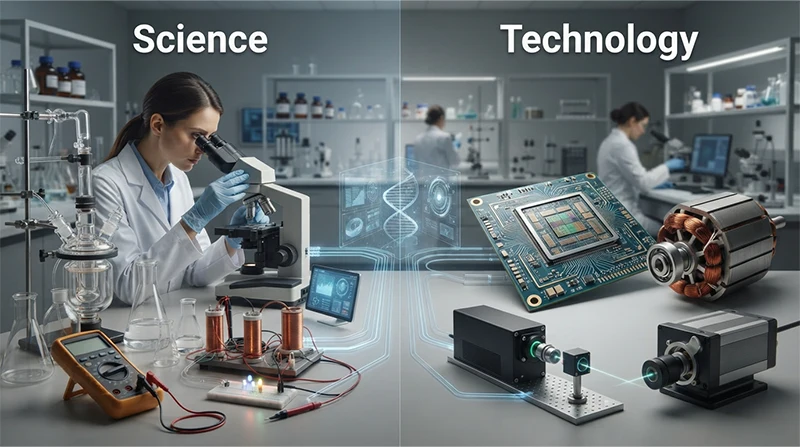
Science asks why something happens. Technology asks how that knowledge can be used. The relationship between science and technology runs in both directions, and each side keeps pushing the other forward.
Research into electromagnetism led to electric motors and wireless communication. Quantum physics gave us semiconductors and lasers. Studies of genes and cells opened the way to lab-made insulin.
The flow also reverses. Galileo’s telescope showed moons orbiting Jupiter, and today supercomputers let researchers simulate the climate and predict how proteins fold.
Sometimes the tool comes first and the theory follows. Engines were pumping water out of mines long before physicists wrote down the laws of thermodynamics, and those laws were developed partly to explain why engines worked at all.
The table below sets the two side by side.
| Dimension | Science | Technology |
| Purpose | Understand and explain natural phenomena | Solve practical problems and extend human ability |
| Method | Observation, hypothesis and experiment | Design, engineering and optimization |
| Output | Theories, laws and data | Tools, machines, systems and software |
How Inventions Build on Each Other
Inventions rarely appear alone. Technological advancements through inventions follow a chain, where each breakthrough becomes the footing for the next. The table below shows how that plays out across six fields.
| Sector | Foundational invention | What it led to |
| Computing | Integrated circuit | Chips holding billions of components, powering laptops, phones and AI data centers |
| Communication | Fiber-optic cables | Fast global internet, cloud services and video streaming |
| Medicine | X-rays and DNA sequencing | CT scanning, personalized treatment and rapid mRNA vaccine design |
| Energy | Photovoltaic cells | Rooftop panels, solar farms and low-cost clean power |
| Manufacturing | Programmable logic controllers | Automated production lines and robotic factories |
| Transportation | Internal combustion and jet engines | Mass car ownership, global air travel and long-distance freight |
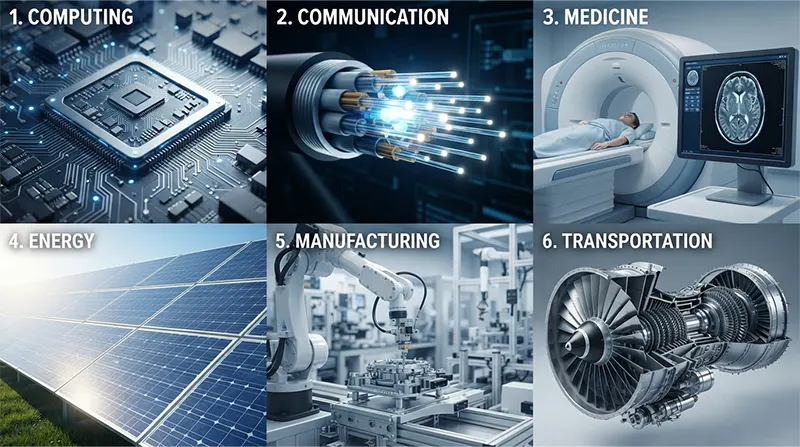
The pattern behind these rows is consistent. First, a new device removes a limit, as the integrated circuit did by shrinking electronic parts. Engineers then make it faster, cheaper and more reliable. Next, several refined inventions merge into something larger, and the phone from the opening paragraph is a good example. Finally, that finished system becomes a platform, and mobile payments and portable health tools were built on it.
What Innovation Adds After the Invention
An invention proves that something is possible. Innovation makes it affordable, dependable and widely used. The role of innovation in technological development is easiest to see in cost and size. Early computers filled rooms, and today’s chips are far faster, smaller and cheaper because of constant redesign.
Henry Ford did not invent the car, but his assembly line made it cheap enough for ordinary families. Uber and Careem did not invent GPS, smartphones or digital payments. They combined them into on-demand rides. Ideas also cross industries. A radar engineer’s discovery that microwaves could heat food led to the household microwave oven, and gaming graphics cards turned out to be ideal hardware for training AI.
Between rare breakthroughs, innovation keeps things moving through software updates, better battery chemistry and faster wireless standards such as the jump from 4G to 5G.
The two terms are easy to confuse, so here is how they differ.
| Aspect | Invention | Innovation |
| Core action | Creating something new for the first time | Improving, combining or applying existing ideas |
| Example | The first lithium-ion battery cell | Fast-charging electric vehicles and grid-scale storage |
Inventions That Changed the World
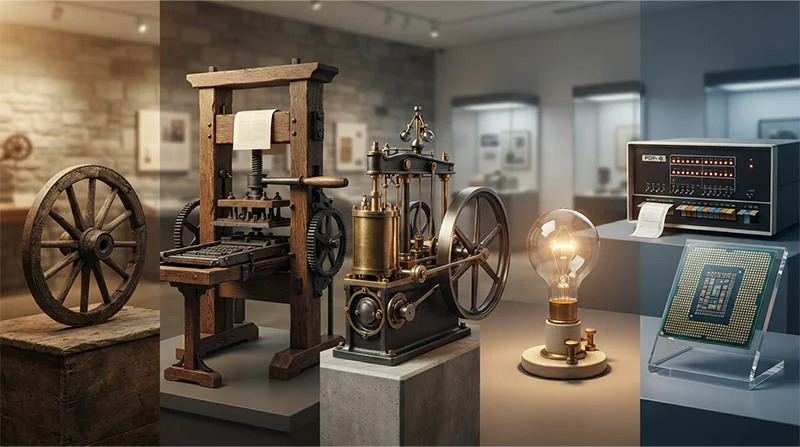
Some inventions are so far-reaching that they redefine what a society can do. The major inventions that changed the world fall into a few clear groups.
The earliest group is about moving goods and ideas. The wheel, dated to around 3500 BCE, made trade and transport practical and later became the core of gears and waterwheels. Around 1440, Johannes Gutenberg’s printing press made books cheap enough to spread literacy and scientific thinking across Europe.
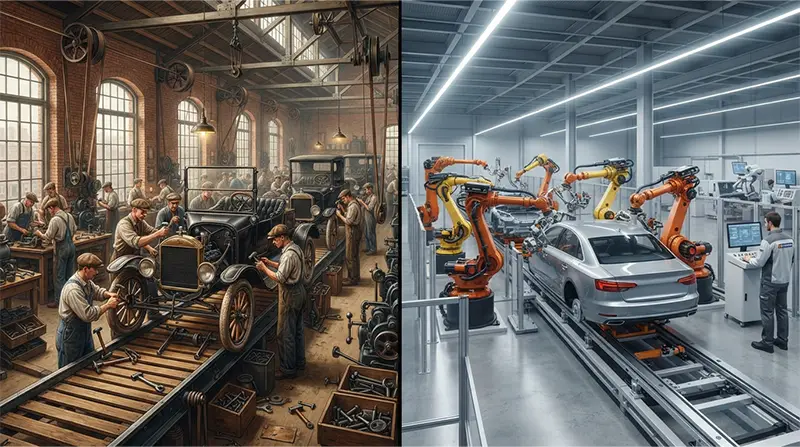
The next group is about power. The steam engine replaced human and animal muscle in factories, trains and ships, and it drove the Industrial Revolution. Electricity followed. Generators, transformers and the light bulb allowed work to continue after dark and cities to run around the clock.
Medicine produced its own turning points. Edward Jenner’s smallpox vaccine in 1796 started a line of immunization that has since saved well over 100 million lives. Alexander Fleming noticed penicillin’s antibacterial power in 1928, and Howard Florey and Ernst Chain turned it into a usable drug in the 1940s, which made many deadly infections treatable.
Communication shrank the planet. Alexander Graham Bell patented the telephone in 1876, and Guglielmo Marconi’s radio later sent signals across the Atlantic. Tim Berners-Lee’s World Wide Web then made the internet usable for ordinary people.
The newest entry is machine learning, which lets software learn from data instead of following only rigid, human-written rules.
How Inventions Make Daily Life Easier
Most people never think about big inventions. They feel them in small moments. Look at how inventions improve everyday life, and the pattern is the same: hours of effort shrink into minutes.
At home, a washing machine turns a half-day chore into a button press, and a refrigerator keeps food safe for days. Air conditioning and indoor plumbing keep a house comfortable and hygienic in any season. Smoke detectors and seatbelts reduce the harm from fires and crashes.
Outside the home, a mobile banking app can pay a bill in seconds, and a video call can bring a relative abroad into the living room. Students attend online classes from a village or a hostel room. Navigation apps reroute a driver around a blocked road before the driver even sees the jam. None of these tools feels dramatic alone, but together they give people back time and peace of mind.
What Humanity Gains From Technological Inventions
The benefits of technological inventions show up most clearly in health. Diagnostic tools such as MRI scanners and wearable monitors catch problems earlier, and robotic surgery systems make treatment less invasive.
Travel has improved in the same spirit. High-speed trains and passenger aircraft cut journeys from months to hours, while anti-lock brakes and collision sensors reduce road deaths.
Energy and knowledge gain as well. Solar panels, wind turbines and large batteries lower dependence on fossil fuels, while digital libraries and search engines put information that once required a university seat within anyone’s reach.
What Inventions Mean for Society
The impact of inventions on society goes beyond convenience. It changes how people earn, learn, live and relate to each other.
Work is the clearest case. Automation has often removed some jobs while creating others, from assembly-line operators to AI engineers. The transition is rarely smooth, and workers often need new skills before new roles open up. Living standards rise along the way, because mass production made food, clothing and household goods affordable for far more families.
Health has changed just as deeply. Public health measures and modern medicine have cut infant deaths and extended life expectancy. A side effect is that populations are growing and aging, which puts pressure on hospitals and families.
Cities were reshaped too. Steel frames, elevators and mass transit made tall, dense cities possible and pulled millions from farms into urban life. Culture shifted with them. People now form friendships, follow the news and take part in civic life through screens.
The costs are real. Industries built on fossil fuels have driven climate change and pollution, while social platforms have connected families yet also spread false information and raised privacy concerns. Societies end up adapting to every invention, and good rules usually arrive after the technology, not before it.
Where Invention Is Heading Next
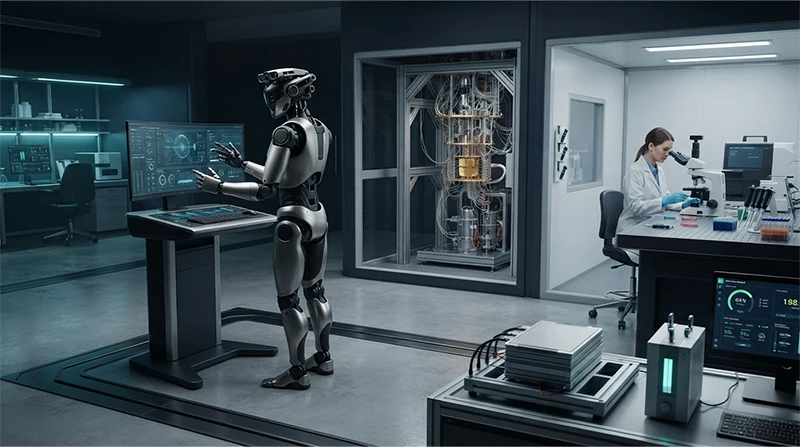
The future of technology and innovation looks less like separate breakthroughs and more like several fields merging. Artificial intelligence is moving from answering questions to carrying out multi-step tasks on its own, and humanoid and warehouse robots are slowly becoming capable enough to work beside people in factories, hospitals and homes.
In energy, solid-state batteries, smarter grids and fusion research aim to make clean power dependable around the clock, while carbon capture and green hydrogen target emissions that are hard to cut. Gene editing is already part of real treatments, with the first CRISPR-based therapy for sickle cell disease approved in 2023, and machine learning shortens the time needed to find new drugs.
Computing hardware is changing as well. Quantum processors may eventually simulate molecules that today’s machines cannot, and chips modeled on the brain or built on light promise to run AI on far less power. Smart glasses are blending digital information into the physical world, and neural implants already let some people with paralysis move a cursor or a prosthetic limb by thought.
Some of these ideas will arrive faster than others, and a few may never live up to the hype. The harder questions are about fairness, regulation and whether developing economies get access alongside major tech hubs.
Why Inventions Still Matter
Every useful tool begins as someone’s unfinished idea. Engineers, scientists and ordinary users then improve each invention until it reaches everyone. The next breakthrough may already be sitting in a notebook or a lab, waiting for the people who will improve it.
Frequently Asked Questions
What is an invention in technology?
An invention is a new device, process or method that did not exist before and has a practical use. Many countries let inventors protect it with a patent, which gives them exclusive rights for a limited period, usually up to 20 years.
Is a discovery the same as an invention?
No. A discovery reveals something that already exists, such as a new planet or mineral, while an invention is something people make, such as a telescope or a mining machine. Patent offices reflect this split, because a natural substance is generally not patentable but a new device built from it can be.
Which invention has had the biggest impact on technology?
Historians and engineers rarely agree on one winner. Electric power and the transistor are common picks, since nearly every modern device depends on them, and the printing press often leads lists focused on knowledge.
Can technology advance without new inventions?
Only slowly. Refining existing tools keeps improving them, but each improvement tends to add less than the last. A new invention resets that curve by opening a different path, which is why progress arrives in bursts rather than in a straight line.
How does an invention become a product people can buy?
Most follow a similar path: an idea, a working prototype, safety and reliability testing, a patent filing, funding, and finally manufacturing and distribution. Many promising inventions stall between prototype and market because production costs too much or demand is too small.
Have any major inventions been discovered by accident?
Yes. Wilhelm Röntgen noticed X-rays in 1895 while experimenting with a cathode-ray tube, and 3M’s Post-it notes grew out of an adhesive that was too weak for its original purpose. Luck helps, but it still takes a trained eye to see that a surprising result is useful.
How do inventions help developing countries?
Low-cost technology can skip older, expensive systems. Kenya’s M-Pesa, launched in 2007, let people send money by mobile phone without visiting a bank branch, and off-grid solar kits bring electricity to homes far from the power grid.
Can artificial intelligence be an inventor?
AI can help generate ideas, from drug candidates to new materials, but courts in the US and UK have ruled that a patent inventor must be a human being. Under current rulings, the credit goes to the people who direct the system.