

Every digital deal runs on one uncomfortable question: who goes first? The buyer does not want to pay before receiving anything, and the seller does not want to hand over valuable work before being paid. Technology makes this worse, because the thing being exchanged is often invisible, easy to copy, and impossible to take back.
So what is an escrow account in technology, and why do so many software companies, freelancers, and online marketplaces rely on it? This guide walks through the meaning, the types, the process, the rules, the costs, and the traps to avoid.
Meaning in Plain Words
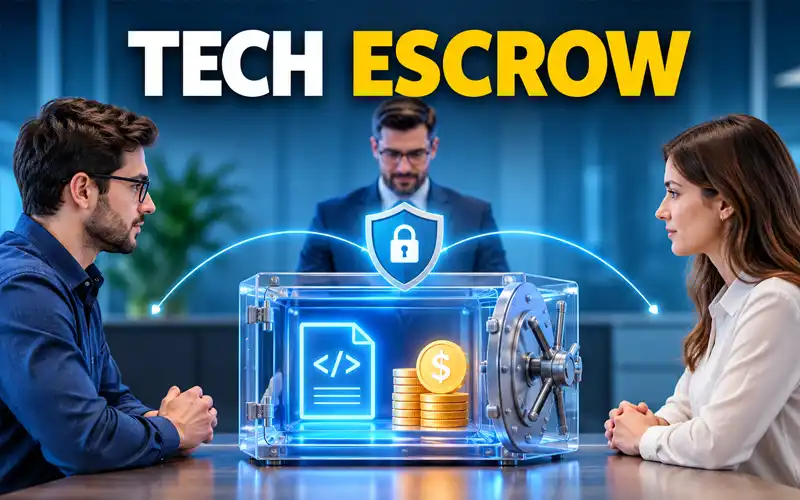
An escrow account is a safekeeping arrangement. Two parties who cannot fully trust each other let a neutral outsider hold something valuable until the agreed conditions are met. Think of a locked safe with a referee holding the only key: neither side can open it alone, and the referee opens it only when the written rules say so.
The word is pronounced ES-kroh, with the stress on the first syllable. It comes from the Old French escroue, meaning a scrap or scroll, which refers to the document a third party kept until a deal was completed.
You will also meet related names. “Holding account” is the closest everyday match, “third-party deposit” stresses that the holder is neutral, and “safekeeping account” focuses on protection. “Custodial account” is sometimes used too, but in several countries it means an account managed for a minor, so check the context.
Escrow in the Technology World
Why Software Deals Need a Neutral Holder
Most businesses today run on technology they do not own. A software licence gives you the right to use a program, not the blueprint behind it. If the supplier changes direction, you are left depending on something you cannot repair, update, or move.
Escrow closes that gap. It lets the owner keep full control of its work while giving the customer a documented path to continuity, and it lets both sides do business without relying on blind trust.
Who Plays Which Role
Every tech escrow involves three roles. The depositor owns the asset, usually a developer or vendor. The beneficiary is the customer who depends on it. The escrow agent is an independent company that stores the asset and follows the agreement.
The agent works for neither side. Its only task is to apply the written terms exactly, and that neutrality is what makes both the owner and the customer willing to accept the arrangement.
Banking Versus Tech
Mortgage and Property Cases
Most people first meet escrow through a bank. When you take a home loan, the lender may add a portion of each monthly payment to an escrow account. From there, it pays your property taxes and homeowner’s insurance when they fall due, so you never miss a bill.
Property purchases use a closing escrow as well. The buyer’s funds sit with a title or escrow company until ownership officially transfers.
Side-by-Side Differences
| Feature | Banking Escrow | Tech Escrow |
| Main purpose | Paying bills on time, closing property sales | Protecting continuity and safe exchange |
| Typical holder | Lender or title company | Specialist escrow agent or platform |
| Release trigger | Bill due date or sale completion | Contract event, delivery approval, or vendor failure |
| Who benefits | Lender and homeowner | Owner and customer equally |
| Regulation | Strong, standardised property rules | Varies by escrow type and country |
Types of Tech Escrow
Source Code Escrow
The developer deposits the application’s code, build instructions, and documentation with the agent. If the agreed conditions occur, the customer receives these materials and can keep the software running or hire someone else to maintain it. This is the classic form, used for business-critical programs.
SaaS Continuity Escrow
Cloud software needs more than code. This type stores deployment scripts, databases, and access credentials for platforms such as AWS, Azure, or Google Cloud. Some providers go further and maintain a replica environment, so the service can be switched on quickly instead of being rebuilt from scratch.
Payment Escrow Online
Common in freelancing and online marketplaces. The client places the fee with a neutral platform first, the worker completes the job, and the money is released after approval. The worker knows the funds exist, and the client knows nothing is paid for unfinished work.
Domain and Crypto Escrow
When a website name or digital asset is sold, the buyer’s payment is held while the seller transfers ownership. Once the buyer confirms control of the domain or wallet, the funds move to the seller. This prevents the classic stalemate where each side waits for the other.
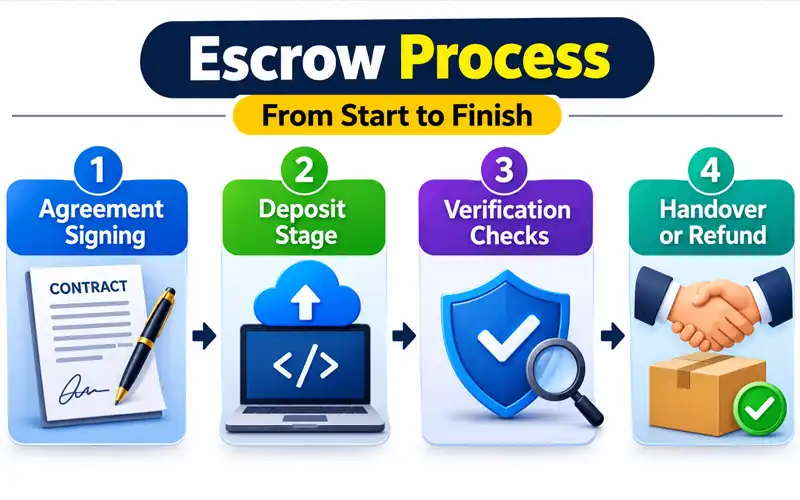
Working Process from Start to Finish
Agreement Signing
All parties sign a contract that spells out what is being protected, how it will be delivered, and which events allow release. For software, this is usually a three-party agreement. Time spent here prevents most disputes later, because vague wording is where arguments begin.
Deposit Stage
The depositor hands over the asset through encrypted channels. Code is often sent automatically from Git platforms such as GitHub, GitLab, or Bitbucket, which removes manual effort. Deposits should be refreshed whenever the product changes significantly, because an outdated copy may be useless in an emergency.
Verification Checks
The agent confirms that what arrived is complete and usable. Basic checks review the file list and structure, while deeper testing compiles the code and compares the result with the live product. The more critical the software, the deeper the testing should go.
Handover or Refund
If a release condition happens, the beneficiary submits a formal request, the agent notifies the depositor, and a response window opens. When no valid objection is raised, the materials are delivered. If the deal finishes normally, software deposits stay stored or are closed out, and payment escrows simply transfer the funds to the seller.
Opening an Escrow Account
Documents Needed
Expect to supply identity or business registration papers, the draft contract, and a clear description of the asset. For software, a list of repositories and technologies helps the agent set up the deposit quickly.
Choosing a Provider
Look for recognised security certifications such as ISO 27001 or SOC 2, and ask where data is stored and how it is encrypted. Choose a provider with experience in your exact escrow type, since a payment platform and a source code specialist solve very different problems. Cheap but weak on security defeats the whole purpose.
Typical Costs
Payment escrow platforms generally charge a percentage of the transaction, often in the low single digits, sometimes with a minimum fee. Software escrow usually works on a flat annual fee that can range from a few hundred to a few thousand dollars, depending on the number of customers covered and the amount of testing. Treat these as rough orientation and ask for a written quote. The contract decides who pays, and it is commonly the customer, though splitting the fee is possible.
Timeline to Expect
Setting up the account itself can take days. Negotiating the agreement takes longer, often a few weeks, especially when lawyers on both sides are involved. Using a standard template shortens this considerably.
Rules You Must Know
Trigger Events Explained
Release conditions are agreed in advance. The usual ones are bankruptcy or insolvency, the vendor discontinuing support, a serious contract breach that is not fixed within an agreed period, and the sale of the intellectual property to a party that will not honour the protection. The shorter and clearer the list, the fewer arguments later.
Legal Duties of Each Party
The depositor must guarantee that the deposit is genuine, lawfully theirs, and that any third-party or open-source components are properly disclosed. The beneficiary must pay the agreed fees and treat released material as confidential, using it only for the maintenance purpose named in the contract. The agent must store everything securely, keep records, and stay strictly impartial.
Dispute Handling
If the depositor objects to a release request, the asset stays locked while the disagreement goes to arbitration or another process named in the contract. The agent never decides who is right. It simply follows the outcome of that process.
Local Law Differences
Rules change from country to country. Payment escrow may need a regulated licence, escrowed material containing personal data must respect privacy laws such as GDPR, and insolvency law can affect whether a bankruptcy trigger is enforceable. For anything significant, have the agreement reviewed locally.
Real-Life Example
Startup and Software Vendor Story
A logistics startup depends on a specialised route-planning tool from a small vendor, protected by source code escrow. When a larger competitor buys the vendor and announces the product’s retirement, the startup requests a release under the sale-of-IP clause. After the objection period passes, it receives the code and hires a freelancer to maintain it. Deliveries continue without interruption. (This is an illustrative scenario.)
Freelancer Payment Case
A client in one country hires a designer in another to build a mobile app interface for a fixed fee. The client deposits the full amount into escrow, and the designer begins work. After testing the finished files, the client approves, and payment is released. Neither side had to rely on the other’s reputation.
Benefits and Limits
Compliance and Continuity
Boards, auditors, and regulators increasingly ask how a company manages third-party risk. A documented escrow arrangement is concrete evidence that critical suppliers have been considered, which can simplify audits and vendor reviews in regulated sectors like finance and healthcare.
Leverage for Developers
Developers keep full ownership of their code, because it is released only under strict conditions. Offering escrow upfront also reassures cautious enterprise buyers and can shorten sales negotiations.
Cost and Delay
Escrow adds fees and some paperwork. It also cannot fix a weak contract or a poor product, since it protects continuity rather than quality.
Red Flags of Fake Escrow Sites
Warning Signs
Scammers build lookalike escrow websites to steal payments. Be cautious if the other party insists on a specific escrow site you have never heard of, if the domain name is a slight misspelling of a known brand, or if payment is only accepted through gift cards or untraceable transfers. No company registration, no phone number, and unrealistically low fees are further signs.
Ways to Confirm a Provider
Type the website address yourself instead of following a link from a message. Check the company’s registration and any required financial licence with the relevant authority. Look for independent reviews, and try contacting support before paying. For a large deal, start with a small test transaction.
Other Ways to Reduce Vendor Risk
Strong Contract Clauses
Warranties and support commitments help, but they are only as reliable as the vendor’s ability to keep them. A promise from a company that no longer exists is worth very little.
Insurance and Bonds
Insurance and performance bonds can compensate you financially for a vendor’s failure. What they cannot do is return the code or the data you need to keep operating.
Open-Source Options
Choosing open-source software gives you access to the code from day one. That removes the need for release conditions, though you still need the skills or budget to maintain it.
Frequently asked questions
Can One Deposit Cover Several Customers?
Yes. Many providers offer multi-beneficiary agreements, where a developer makes a single deposit and enrols many customers under it.
What If the Agent Shuts Down?
Reputable agents maintain business continuity plans and secure backups. Good agreements also include a clause that lets the parties move the deposit to a replacement agent.
How Long Does an Escrow Last?
It lasts as long as the agreement says. Software escrow often runs for the length of the licence, while payment escrow usually ends once the job is approved.
Do I Need a Lawyer?
For a small online purchase, no. For a long-term software dependency or a high-value deal, legal review is a sensible investment.
Final Thoughts
Escrow turns “trust me” into “check the rules.” Start by asking which asset you could not replace if a deal went wrong, then match it to the right type and a provider you have verified. That one decision is the foundation of a safer digital agreement.