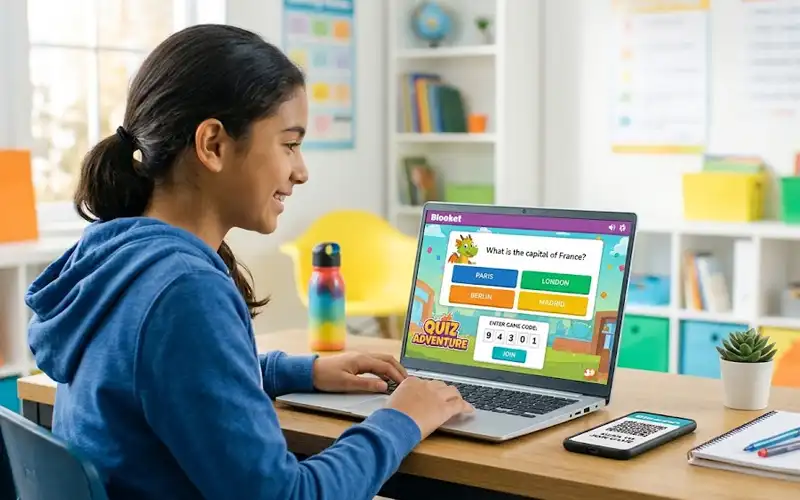

Blooket turns quizzes into interactive games where players answer questions, compete with others, and collect Blooks. However, getting better at the game involves more than clicking answers quickly. Understanding game mechanics, choosing the right mode, and making decisions based on what is happening can help you improve your performance.
The best Blooket tips and tricks depend on what you want to achieve. Some players want to win more matches, others want to collect Blooks without wasting tokens, and teachers want to make classroom activities more effective. This guide covers practical strategies for each goal, including useful game-mode advice, collection management, classroom ideas, and ways to keep your account safe.
Learn the Basics Before Choosing a Strategy
Blooket offers different ways to play, including live games, solo activities, and homework assignments. The experience depends on the selected mode and the settings used by the host. Learning these differences helps you choose an activity that matches your needs.
Visit the official Blooket website to explore available features. If you are joining a live game, use the official Blooket play page and enter the game code provided by your host.
Before starting, check three things: the objective, how answers affect your progress, and whether the game involves other players. For example, answering questions may help you earn points in one mode but build resources or unlock actions in another.
Once you understand these basic rules, you can focus on the decisions that matter instead of spending the entire game figuring out what to do.
Choose the Right Game Mode for Your Goal
One of the most useful Blooket tips is to select a mode based on the experience you want. Each mode changes how questions affect the game, so the same approach will not work everywhere.
Gold Quest for Unpredictable Matches
Gold Quest combines answering questions with opening treasure chests that can change your gold total. Rewards may help you move ahead or cause your score to drop.
Tip: Keep an eye on the leaderboard throughout the match. Do not assume that an early lead guarantees a win, because later chest results can change the standings. Focus on answering questions accurately while adapting to changes in your position.
Factory for Building and Upgrading
Factory involves unlocking and upgrading Blooks that generate in-game money. Your progress depends on how you manage upgrades and use the resources available to you.
Tip: Learn what each upgrade contributes before spending your resources. Instead of making random purchases, look for upgrades that support your current progress and help you build a more effective setup.
Café for Managing Customers and Supplies
Café asks players to serve customers, answer questions to restock supplies, and purchase upgrades. Poor resource management can make it harder to keep up with customer orders.
Tip: Pay attention to your stock levels and customer needs. Avoid spending all your available resources on upgrades if you still need supplies to serve customers. A balanced approach helps you keep the café running smoothly.
Tower Defense for Planning Ahead
Tower Defense focuses on building defenses and stopping waves of enemies. Your placement decisions and ability to improve your setup can affect how well you handle later waves.
Tip: Consider which areas enemies travel through and whether your towers can cover those paths effectively. If your defenses struggle against a wave, review their placement and upgrades instead of repeating the same setup without changes.
Crypto Hack for Managing Risk
Crypto Hack combines question answering with collecting cryptocurrency and attempting to take resources from other players. Your decisions can affect how much progress you keep.
Tip: Understand the available actions before using them. Consider the possible outcome of an attack and how it could affect your position. Do not assume that every attempt will produce the same result.
Racing for Speed and Accuracy
Racing rewards players for answering questions and moving toward the finish line. Power-ups can also influence the competition.
Tip: Build a balance between speed and accuracy. Read the question carefully, choose your answer confidently when you know it, and learn how the available power-ups affect your progress.
For more details about current modes and their rules, consult Blooket’s official Game Mode Previews. The best strategy can change with game settings, so treat these tips as starting points rather than guaranteed winning methods.
Turn Difficult Questions Into an Advantage
Your knowledge of the question set can make a difference in many Blooket modes. Even when a game rewards speed, repeatedly choosing incorrect answers can hold back your progress.
Start by identifying the subjects you find difficult. If you struggle with science terms, historical dates, or mathematical calculations, review those topics before joining another competitive session. Familiarity with the material makes it easier to recognize correct answers without spending too much time thinking.
Pay attention to the wording of each question. Words such as not, except, and least can change what the question is asking. Read the complete sentence instead of selecting an answer based on the first few words.
After playing, review incorrect answers whenever the game or question set provides that information. Write down unfamiliar facts or revisit the relevant lesson. This gives you a clear reason to practice again and helps you improve beyond a single match.
Use a Simple Practice Plan to Track Progress
Playing more games does not automatically mean you are improving. A small practice plan can help you understand what is working and where you need more effort.
Before a session, choose one target. You might want to learn a new mode, improve accuracy on a particular subject, or understand how an upgrade system works. Avoid trying to master every part of the game at once.
After the session, ask yourself three questions:
- What did I do well?
- Which decision or question caused the most difficulty?
- What will I try differently next time?
For example, if you lose progress because you misunderstand a game mechanic, spend your next session learning that mechanic. If you know the rules but struggle with questions, focus on the subject instead.
Short, focused sessions can be useful when you have limited time. Longer sessions may suit modes that involve more planning. The goal is to make each session purposeful rather than simply increasing the number of games you play.
Collect Blooks Without Spending Tokens Carelessly
Blooks are collectible characters that make the platform more engaging for many players. If collecting them is your goal, understanding the Market and available packs can help you make better decisions.
Check Pack Odds Before Opening
Different packs offer different collections and chances of receiving particular Blooks. Read the displayed odds when available, especially if you are trying to obtain a specific rarity.
A low probability means you may need many attempts without receiving the item you want. There is no guarantee that the next pack will contain a rare Blook, even if previous attempts have not produced one.
Choose packs based on the collection you want rather than assuming that every expensive pack provides better value. The displayed odds and the items included are more useful guides than price alone.
Set a Spending Limit
Decide how many tokens you want to spend before opening packs. Keeping some tokens available gives you flexibility when you find another collection you prefer.
For example, if you want a particular seasonal Blook, you can save your tokens until the relevant pack becomes available again, provided the pack returns. If you enjoy collecting different characters, you may prefer to open packs that contain items you do not already own.
A spending limit also helps you avoid using every token immediately just because a pack looks interesting.
Check Your Collection for Duplicates
Review your collection from time to time to see which Blooks you own and whether the Market provides a selling option for duplicates. If selling is available, check the token return before confirming the action.
Do not assume that every duplicate can be sold or that you will recover the original pack cost. Use the options displayed in your account to understand what is currently possible.
Make Solo Play More Useful
Solo play gives you an opportunity to learn without competing directly against classmates. It can be particularly helpful when you are unfamiliar with a mode or want to practice a question set at your own pace.
Choose a solo activity that matches your goal. The Study mode, for example, focuses on answering questions rather than playing a traditional game. Other supported solo modes add mechanics such as resource management, defense, or movement.
If you are learning a new mode, pay attention to how each action affects your progress. Test available options, observe the results, and adjust your approach when something does not work as expected.
Solo activities can also help you discover which types of games you enjoy most. Once you understand a mode, you will be better prepared to participate when a similar activity appears in a hosted session.
Blooket Tips and Tricks for Teachers
Teachers can use Blooket to make revision more interactive, check understanding, and give students another way to practice course material. The most effective classroom approach starts with a clear learning goal.
Choose Question Sets That Match the Lesson
Explore the available question sets before creating a new one. A suitable set can save preparation time, but teachers should review the questions to make sure they match the subject, difficulty level, and learning objectives.
If a set contains unfamiliar material or questions that are too advanced, edit or create a more appropriate version when the available features allow it. Good question quality matters more than simply having a large number of questions.
Match the Game to the Classroom Activity
Different modes suit different situations. A quick competitive activity may work well for reviewing familiar facts, while a mode involving planning may be better for a longer session.
Explain the rules before the game starts. Tell students whether the main purpose is revision, checking knowledge, or practicing a specific skill. This helps them understand the activity instead of focusing only on the leaderboard.
Teachers should also consider the class size, available time, and students’ familiarity with the mode when making a selection.
Use Game Reports to Find Learning Gaps
Available reports can help teachers identify questions that students found difficult. If many students struggle with the same topic, it may need another explanation or a different practice activity.
Use these results to guide the next lesson rather than treating one game as a complete assessment. Combine the information with classroom discussion, written work, and other checks of understanding to get a more balanced picture of student progress.
Keep Competition Positive
Competition can increase excitement, but not every student feels comfortable when results are displayed publicly. Set clear expectations about respectful behavior and remind students that mistakes are part of learning.
You can also vary activities so that success does not depend only on finishing first. Recognizing improvement, careful thinking, and participation can help more students feel involved.
Avoid Shortcuts That Put Your Account at Risk
Some websites claim to offer free tokens, rare Blooks, automatic answers, or guaranteed wins. These offers can be tempting, particularly when players want to build a collection quickly, but unknown tools may create security problems.
Be cautious with token generators, unverified browser extensions, and websites that ask for your Blooket password. A page showing a large token balance does not prove that your actual account has received those tokens.
Avoid pasting unfamiliar code into your browser console or installing software simply because a website promises rewards. Such actions can expose browsing information, account sessions, or saved login details. They may also violate platform rules.
If you suspect that an extension has compromised your account, remove it, change your password, and review other accounts that share the same password. Use official account and support options if you need further help.
The safer approach is to use the platform’s normal features and improve through practice. No third-party tool can guarantee a win in every game.
Frequently Asked Questions
Which Blooket mode is easiest for beginners?
Classic and Racing are reasonable starting points because they focus on answering questions and competing for progress. However, the best choice depends on the player’s interests and the rules of the available game.
How can I improve my chances of winning Blooket?
Learn the rules of your chosen mode, practice the relevant questions, and understand how your actions affect the result. Since some modes include random rewards or changing conditions, no strategy guarantees a win every time.
What should I check before buying a Blooket pack?
Review the pack’s contents, listed drop rates, token cost, and whether it includes the Blook you want. Set a spending limit and remember that rare items are not guaranteed.
Can teachers use Blooket for homework?
Yes. Blooket supports homework assignments through compatible game modes. Teachers should check the available assignment settings, choose suitable questions, and explain the expected completion requirements to students.
Are Blooket hack extensions safe?
Unknown extensions marketed as hacks can pose security risks, particularly if they request access to browsing data or login information. Avoid installing unverified tools or sharing your password with third-party websites.
Final Thoughts
The most useful Blooket tips and tricks focus on understanding the game rather than searching for shortcuts. Learn the mechanics of your preferred modes, practice questions that challenge you, and make careful decisions when collecting Blooks.
Teachers can get more value from the platform by choosing relevant question sets, setting clear learning goals, and using available reports to plan future lessons. With a little preparation and a willingness to learn from each session, Blooket can become a more rewarding experience for both players and classrooms.