




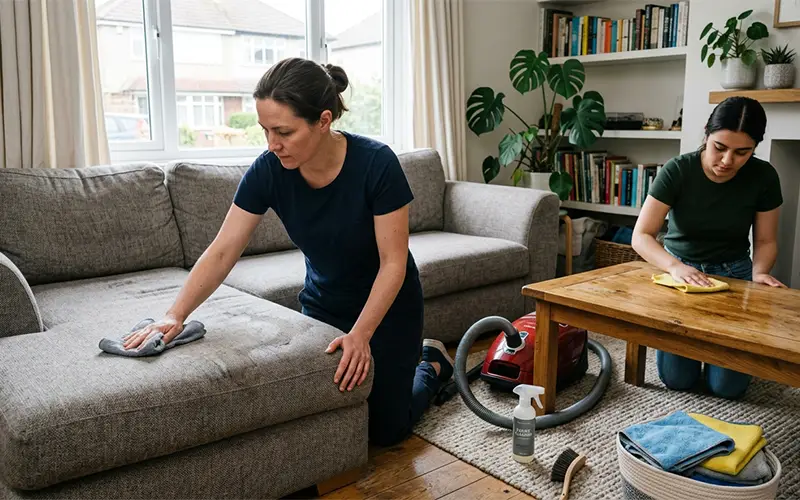
Furniture deals with a surprising amount of daily abuse. Dust settles on tables and cabinets, sofas collect crumbs and pet hair, while armrests and seat cushions gradually pick up body oils. Drinks can leave marks, food can create stubborn spots, and unsuitable cleaning products may cause more damage than the original stain. A good furniture cleaning routine therefore depends less on using powerful chemicals and more on choosing the right treatment for the surface.
Fabric, leather, solid wood, and veneer all have different cleaning requirements. What works safely on a water-resistant sofa may be inappropriate for a leather chair or a finished wooden table. Before applying anything, identify the material, check its care instructions, and consider the condition of the surface. Those three steps provide a much safer starting point than relying on a one-size-fits-all household recipe.
Check the Material First
The first step in furniture cleaning is figuring out what the piece can safely tolerate. Upholstered furniture may have a care label beneath a cushion, along the frame, or underneath the piece. If a label is missing, manufacturer documentation is the next place to look.
Many upholstered products use four familiar codes. W means a suitable water-based method can be used, S indicates solvent-based treatment, WS permits either approach, and X generally restricts cleaning to vacuuming or light brushing. These codes matter because upholstery is more than an outer layer of fabric. Moisture can travel into backing materials and cushion filling, where it may take considerably longer to dry.
The finish also matters on hard furniture. A sealed wooden surface is different from unfinished timber, while veneer consists of a thin decorative wood layer attached to another material. Leather can have different protective coatings as well. If you are unsure about the finish, avoid experimenting on the most visible area.
A discreet test area is useful whenever product application is permitted. Apply a small amount where it will not be noticed easily, let the area dry, and inspect it for color changes, residue, texture differences, or other reactions.
Start With Dry Cleaning
One of the simplest furniture cleaning tips is to remove loose dirt before introducing moisture. Vacuuming or dusting first prevents grit from being rubbed into a surface during later treatment.
For upholstered chairs and sofas, an upholstery attachment can collect loose particles from the main surfaces, while a crevice tool reaches narrow seams and spaces beneath cushions. Pet hair, crumbs, and fine debris often accumulate in those hidden areas. Leaving them behind can make subsequent cleaning less effective.
Wood usually benefits from a soft, lint-free cloth during routine dust removal. Working in the direction of the grain is a sensible habit, particularly on finishes that can show small surface scratches. Avoid rough paper products or anything that may act like an abrasive.
Dry removal also gives you a cleaner starting point for stain treatment. Once loose particles are gone, a damp cloth or approved cleaner is less likely to turn them into a dirty film across the surface.
Treat Fabric Carefully
Fabric upholstery can hold dust, oils, hair, and spilled liquids between its fibers. The correct furniture cleaning method depends on the care code, the textile itself, and the type of soil being removed.
For water-safe upholstery, work in small sections instead of wetting the entire cushion. Use a cleaner intended for upholstery and follow its label instructions for dilution and application. A soft brush or clean microfiber cloth can help loosen ordinary soil, but heavy scrubbing is rarely a good idea. Excessive friction may flatten fibers, alter the texture, or create a visibly different patch.
Liquid spills should be handled as soon as practical. Blot the affected area with a clean absorbent cloth rather than rubbing from side to side. Pressing and lifting draws out moisture without spreading it over a larger section of the fabric.
Greasy marks require a little more care because water alone may not lift them effectively. Some upholstery manufacturers recommend an absorbent powder for particular oil-based spills, but such methods should only be used when they are compatible with the fabric.
Deep treatment is possible when the upholstery is designed for it. Extraction machines apply a cleaning solution and remove liquid along with loosened soil. Correct use is essential, because over-wetting can send moisture into cushion filling and make drying much more difficult.
Make Sofa Cleaning More Controlled
A sofa typically needs more attention than occasional dusting because it contains several high-contact areas: seats, arms, backs, seams, and cushion edges. Good sofa cleaning starts with the care code rather than the stain itself.
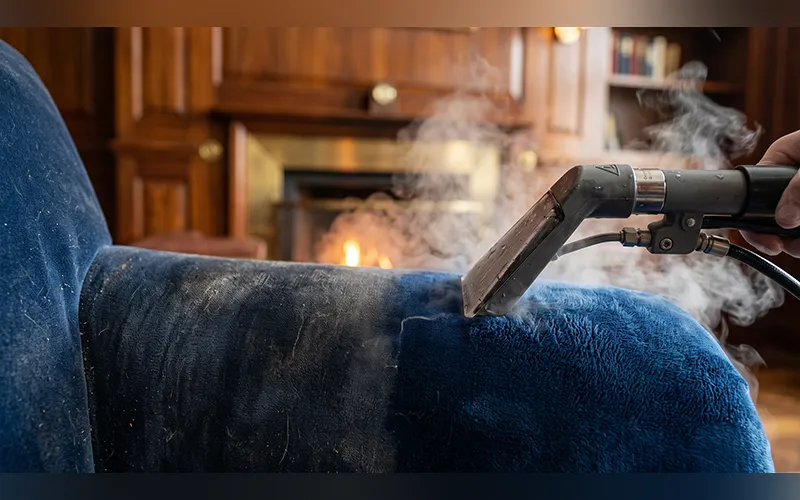
Remove loose cushions whenever the design allows it, then vacuum the exposed frame and the underside of each cushion. This is where crumbs, hair, and grit often hide. Cleaning only the visible surfaces leaves a significant amount of debris untouched.
Spot treatment should remain localized. There is little benefit in soaking an entire sofa because one cushion has a mark. Excess liquid increases drying time and may penetrate deeper layers that were never dirty in the first place.
Air circulation becomes especially important after moisture-based treatment. Stand removable cushions so that air can reach them, keep the surrounding space open, and use a fan to improve evaporation when appropriate. Surface dryness can be misleading, so allow enough time for the padding underneath to dry as well.
A smell that keeps returning after treatment may indicate contamination below the outer fabric. In such cases, adding more cleaner may simply increase residue without addressing the source.
Keep Leather Looking Its Best
Leather needs a different style of furniture cleaning because its surface and finish can be affected by products that are harmless on washable fabric. Abrasive cleaners, strong solvents, and excess moisture may damage the protective layer or alter the appearance.
Begin by removing dust and loose debris with a soft cloth or a suitable soft-brush vacuum attachment. For deeper maintenance, follow the manufacturer’s product recommendations rather than choosing a household spray designed for another surface.
Frequently touched zones deserve extra attention. Headrests, armrests, and seat fronts can accumulate body oils faster than areas that receive little contact. Gentle, regular maintenance is preferable to waiting until heavy grime has formed.
Some leather products are designed to be conditioned periodically. The correct frequency depends on the leather and its finish, so the manufacturer’s schedule should take precedence over a universal six-month or yearly rule.
Placement also affects longevity. Strong sunlight can contribute to fading, while concentrated heat from radiators, fireplaces, or vents may accelerate drying. Keeping sharp objects away from the upholstery is equally sensible because scratches caused by keys, hardware, or pet claws are difficult to disguise.
Clean Wooden Surfaces With Less Moisture
Good wood furniture cleaning begins with the finish, not the stain. Finished wood generally tolerates more everyday handling than unfinished timber, but even sealed surfaces should not be exposed to unnecessary water.
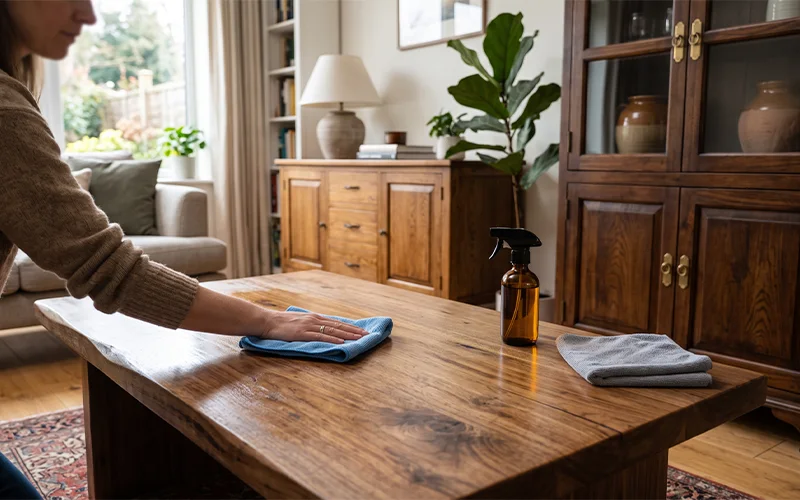
For routine dust, use a dry microfiber or other soft cloth. When a surface has sticky residue or heavier grime, use only a cleaner approved for that particular finish. A cloth should be lightly dampened when damp cleaning is allowed, never saturated.
Moisture deserves special attention around edges, joints, seams, and veneer. Liquid left sitting in these areas can create problems that are not immediately visible. Wipe away excess moisture promptly after treatment.
Knowing how to clean wooden furniture also means understanding when not to polish. Some products can leave a coating that attracts dust or changes the appearance of a finish, and certain manufacturers specifically recommend against particular polishes. A product being labelled for wood does not make it suitable for every table or cabinet.
Everyday protection makes a noticeable difference. Coasters reduce the chance of moisture rings, heat-resistant pads protect against hot dishes, and spills should be wiped instead of being allowed to sit on the finish.
Give Fabric a Practical Maintenance Routine
Regular fabric furniture cleaning is easier when light maintenance is built into normal housekeeping. Upholstery in a busy family room will naturally accumulate dirt more quickly than a chair that is rarely used.
Vacuum frequency should reflect the amount of traffic, along with factors such as pets and children. Give priority to seams, cushion gaps, and contact areas instead of spending equal time on every part of the piece.
A fabric protector can be helpful on compatible upholstery. These products are intended to improve resistance to staining and give you more time to deal with accidental spills. They are not a replacement for routine vacuuming or proper stain treatment.
Homemade mixtures deserve caution. Familiar ingredients can still react with dyes, coatings, backing fabrics, or textile finishes. Using the correct product for the specific material is generally safer than assuming a kitchen ingredient will work simply because it is commonly used for cleaning.
Choose a Method That Fits the Surface
The main furniture cleaning methods differ according to moisture level, chemical action, and the type of material being treated. A simple comparison makes those differences easier to understand.
| Material | Suitable Approach | What to Avoid | Typical Use |
| Fabric upholstery | Vacuuming, approved spot treatment, extraction where permitted | Over-wetting, harsh chemicals, aggressive scrubbing | Sofas, chairs, cushions |
| Leather | Soft-cloth care and manufacturer-approved products | Abrasive cleaners, unsuitable solvents, excess water | Leather seating |
| Finished wood | Dry dusting and controlled damp cleaning when approved | Water pooling, abrasive pads, unsuitable polish | Tables, cabinets, chairs |
| Wood veneer | Light dusting and minimal-moisture treatment | Excess liquid and harsh chemicals | Veneer furniture |
| X-code upholstery | Vacuuming and gentle brushing | Water-based cleaners and soaking | Restricted or delicate fabrics |
Dry vacuuming is generally the least invasive method and works well for routine debris removal. For X-code upholstery, it is particularly important because liquid products are generally outside the recommended care approach.
Solvent-based treatment can be appropriate for materials carrying an S code, but only the correct upholstery solvent should be used and handled according to its instructions. Ventilation may also be necessary.
Water-based cleaning offers deeper treatment for suitable W and WS fabrics. Where extraction is approved, the equipment can help remove dissolved soil and excess solution rather than leaving all of it in the upholstery.
Conditioning is a separate maintenance step. It does not replace cleaning and should only be used where the manufacturer recommends it for the material or finish.
Protect Furniture After Cleaning
Effective furniture cleaning is easier when everyday habits reduce the amount of dirt and damage reaching the surface. Position pieces away from prolonged direct sunlight where fading is a concern, and avoid placing sensitive materials beside concentrated heat.
Cushions that can safely be rotated or repositioned should be changed from time to time. Sharing the wear across different areas helps reduce uneven compression and surface fatigue.
Wood benefits from simple barriers against common hazards. A coaster under a cold drink can prevent a moisture mark, while a heat-resistant mat protects the finish beneath hot cookware or serving dishes.
Furniture should also be handled carefully during normal use. Lifting decorative objects instead of dragging them across a tabletop helps reduce scratches. The same principle applies when moving accessories on finished surfaces.
Know When to Call a Professional
Routine furniture cleaning can be handled at home when the material and care instructions are straightforward. More complicated situations deserve greater caution.
Large or persistent stains, delicate textiles, valuable antiques, unusual finishes, and furniture affected by excessive moisture can all be difficult to assess without specialist experience. A professional cleaner can select equipment and treatment methods based on the construction of the piece rather than relying on a general-purpose product.
Professional help is particularly useful when a stain has an unknown origin. Applying several different cleaners one after another may leave layers of residue and make later treatment more difficult.
The same applies to furniture that has already suffered a reaction from an unsuitable product. Further experimentation may worsen discoloration or finish damage, whereas a trained specialist can first assess what has happened.
Mistakes That Can Damage Furniture
Many problems start with using too much product. Excess moisture can migrate into padding, joints, or beneath veneer, while leftover cleaner can create a sticky surface that attracts more dirt.
Another common error is treating every material with the same solution. A formula designed for fabric may be unsuitable for leather, and a general-purpose spray may interact badly with a wood finish.
Scrubbing harder is not necessarily a better solution for a stubborn stain. Aggressive friction may spread contamination, disturb upholstery fibers, or remove part of a surface coating before the stain itself is gone.
Ignoring the care label creates an avoidable risk as well. Upholstery codes exist to define what types of cleaning the material is designed to withstand, so bypassing them removes one of the simplest safeguards available.
Build a Simple Care Schedule
A practical furniture cleaning routine does not have to follow an elaborate calendar. Regular vacuuming is useful for upholstered pieces, especially around seams and beneath cushions, while wooden furniture can be dusted as part of normal household cleaning.
Spills should be addressed promptly rather than left until they dry and become harder to remove. Leather can be wiped and conditioned according to its manufacturer’s recommendations, and fabric can receive deeper treatment when routine maintenance is no longer enough.
How often a piece needs attention depends largely on usage. A sofa used every day by a family will collect more dirt than an occasional accent chair. Homes with pets, children, or frequent guests may need to clean high-contact areas more often.
The goal is steady maintenance rather than repeated intensive treatment. Small amounts of dirt are easier to handle before they become embedded, and protecting the surface between cleanings reduces the workload later.
Final Thoughts
Successful furniture cleaning comes down to matching the method to the material. Fabric requires attention to its cleaning code and moisture tolerance, leather benefits from compatible products and protection from heat and sunlight, while wood needs careful treatment based on its finish.
Start with dry debris removal, choose products designed for the surface, and use moisture sparingly where it is permitted. Give cleaned upholstery enough time to dry, avoid aggressive rubbing, and follow the manufacturer’s care guidance whenever possible.
Consistent maintenance is more effective than harsh, occasional cleaning. With the right habits, everyday dirt stays manageable, surfaces remain in better condition, and furniture can retain its appearance for much longer.
Frequently Asked Questions
What is the safest way to start Furniture Cleaning?
The safest approach to Furniture Cleaning is to identify the material first, read its care instructions, and remove loose dust before using any liquid or cleaning product.
How often should furniture be professionally cleaned?
Professional Furniture Cleaning depends on usage, fabric type, stains, pets, and household traffic. Heavily used upholstery may need specialist attention more often than lightly used pieces.
Can water be used on all upholstered furniture?
No. Upholstery marked with W or WS may allow suitable water-based cleaning, while S and X fabrics have different restrictions that must be followed carefully during Furniture Cleaning.
What is the best method for cleaning a fabric sofa?
Start with thorough vacuuming, then use a Furniture Cleaning method approved for the sofa’s care code. For suitable fabrics, controlled spot treatment or extraction can remove deeper soil without excessive moisture.
How can leather furniture be cleaned without damaging it?
Use products approved for the specific leather finish and apply them sparingly with a soft cloth. Avoid abrasive materials, strong household cleaners, and excessive moisture during Furniture Cleaning.
What should be avoided when cleaning wooden furniture?
Avoid soaking the surface, abrasive pads, and products that are not suitable for its finish. Excess moisture can affect joints, veneer, or protective coatings, while harsh cleaners may dull the surface.
Is vacuuming enough for regular furniture maintenance?
Vacuuming is an effective starting point for removing dust, crumbs, pet hair, and loose debris from upholstery. It should be combined with appropriate spot care as part of a regular Furniture Cleaning routine.
When should a furniture cleaning job be handled by a professional?
Professional service is a good option for heavy stains, delicate fabrics, valuable furniture, unknown finishes, persistent odors, or problems that have not responded safely to routine Furniture Cleaning.